Words

I think that I have a good to excellent vocabulary; I read a lot, I write a bit, I had a good education and I tend not to need a dictionary – I don’t believe that I actually have a paper dictionary here in the house. When, on the rare occasions, I do come across an unfamiliar word – one that I might be hard pressed to give an accurate dictionary-style definition – it doesn’t matter because I can understand the general meaning from the context. For the vast majority of books and articles that I read, I would say I have a total understanding of every word used in my own native language.

So, imagine my chagrin when I recently reread a novel I had read some 25 years ago (hint: referred to recently on this blog) and was dismayed to come across a plethora of words, some of which, luckily, stirred a vague memory in my word-hoard. Nevertheless IMG_1324many of them forced me to stop, and go to my online Oxford Dictionary of English and check to see if my understanding tallied with the author’s use and, embarrassingly, to actually look up new words that appeared almost on every page – it was like reading in a foreign language.

I remember – I think – reading somewhere that Anthony Burgess (The Malaysian Trilogy; A Clockwork Orange; Earthly Powers, etc.) imageskept a dictionary on the shelf in his toilet and tore out a page each day after having committed it to memory!

I am not going to go that far, of course and, besides, I don’t have a paper dictionary, remember?

Wasn’t it Humpty Dumpty who said (rather crossly, as far as I can remember) that words mean what you want them to mean, so here is a sample of words that I came across – hats off to anyone who can understand these, lifted, as they are, from context – but all from the same novel published in 1989 – shortlisted for the Booker Prize too!

abulia

glair

kern

^ jorum *

^ villious

^ ataraxy

echolalia

spruik

kickshaw

flitch *

cully

bumper *

epicene

finical

losel

mephitic

In all honesty, I can’t remember what half of them mean now – and I only finished reading the novel yesterday, too.   Luckily my online OED keeps track of recently looked up words so there you have it.  Nevertheless, it’s humbling to think that the English language is so vast and complex that there will always be new words to come across and not just the recently added ones as in “Milkshake Duck” which was recently acclaimed as the Word of the Year here in Australia.  Go figure it out yourself.

* Words I have a memory my father used to use but I still had to check to ensure the author’s use tallied with my understanding of my father’s usage all those years ago.

^ Words which the inbuilt dictionary on my iMac does not recognise.

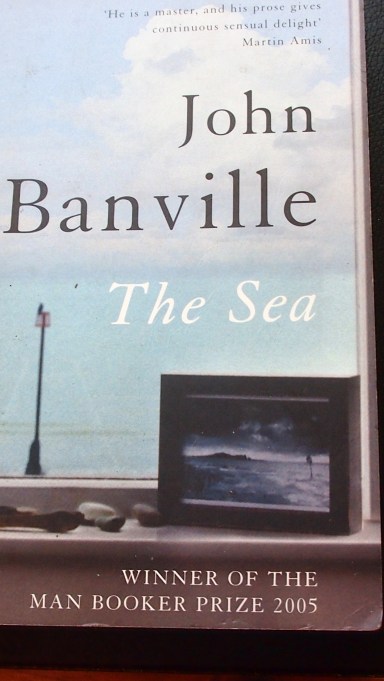
The Sea

I first read John Banville’s extraordinary tale, The Book of Evidence, based on a real-life murderer staying as a guest at the Irish Attorney General’s residence while on the run,

OLYMPUS DIGITAL CAMERA

back in the late eighties. Banville’s insightful recount of the “grotesque, unbelievable, bizarre and unprecedented*” set of circumstances which arose in Dublin in the early eighties was fascinating.

Funny how things change, along with latitudes, and Banville, like other authors I read back then, became forgotten, discarded and in competition with an increasing variety of TV shows, movies and the advent of video recorders and that was before VCD or DVD and Blue Ray!

Anyway, jump forward to now.

The Sea by John Banville caught my eye recently. Seen through the haunted eyes of the narrator, Max, an art historian, who returns to the seaside village where so many disturbing events one childhood summer took place.

Bereft of his recently deceased wife, Anna, Max seeks to come to terms both with his bereavement and the events that have haunted him since that summer so many years ago.

The early mention of the strange tide at the seaside village and Max’s odd assertion that he would not swim again combined with the novel’s bleached out seascape cover hooked me. My childhood summers too were spent down at the seaside so the title resonated with me too!

OLYMPUS DIGITAL CAMERA

Anyway, Max switches, ably assisted by booze, from recent episodic memories of the surgeon’s almost unseemly haste in washing his hands of the death of his wife, Anna (“At that, as if released Mr. Todd gave his knees a quick smack with two flat palms and jumped to his feet and fairly bustled us to the door”) to other, less well understood images from a traumatic childhood summer when the insouciant and feckless Grace family arrived for the summer holidays at the small seaside village.

The first thing I saw of them was their motor car parked on the gravel inside the gate. It was a low-slung, scarred and battered model with beige leather seats and a big spoked polished wood steering wheel … on the shelf under the sportily raked back window … was a touring map of France, much used. …the girl’s voice coming down from on high, the running footsteps and the man here below with the blue eyes giving me that wink, jaunty, intimate and faintly satanic.”

Mingled with scenes from his current stay at the Cedars – the cottage where he has retreated since his wife’s death.

“There goes the Colonel, creeping back to his room That was a long session in the lav. Strangury, nice word. Mine is the one bedroom in the house which is, as Miss Vavasour puts it with a demure little moue, en suite.”

Staying now at the same guesthouse which the wealthy Graces had rented that summer, Max drifts in and out of the past and present, interspersing his memories of the twins, the withdrawn Milo and the petulant Chloe, their lush mother, Connie Grace, jovial Carlo her husband and the outsider Rose, with the newly discovered trivia of his life at Miss Vavasour’s guesthouse where he is the only other guest along with the Colonel.

“Miss Vavasour is downstairs playing the piano. She maintains a delicate touch on the keys, trying not to be heard. She worries that she will disturb me, engaged as I am up here in my immense and unimaginably important labours.”

Unfamiliar with their world, Max attributed godlike stature to the Grace family but it was with the voluptuous Mrs. Grace that attracted the young Max.

“Was that a complicit smile? With a heaving sigh, she turned and lay down supine on the bank with her head leaning back on the grass and flexed one leg so that suddenly I was allowed to see under her skirt along the inner side of her thigh all the way up to the hollow of her lap and the plump mound there sheathed in tensed white cotton.”

Slowly, the three threads of Max’s memories coalesce and mysteries, cunningly concealed throughout the novel, are revealed and minor characters assume major proportions while the erstwhile understandings are now shown to have been misunderstandings.

Gracefully the strands, of seemingly unconnected events from the triad of introspective settings that Max relives, are woven into a stunning denouement whereby all is made clear from what had been only partially hinted at and mistakenly understood before.

Fantastic, a great read.


*          Attributed to Dr. Conor Cruise O’Brien with reference to Charlie Haughey’s government during that period.

NoseDive

(Not a graceful curve or elliptical)

I don’t know why, but ever since I returned from Europe in August 2017, I seem to have hit a dry patch with regard to my writing and this blog thingy. I have been able to write neither bucolic accounts of my European Peace Walk, nor do research for my Red Branch Chronicles.

That’s not to say that I’ve been lazy – far from it. I seem to have been busy all day and everyday, just doing things that need doing and that won’t get done by themselves. There is always something “new” that has to be done in everyday, general living which has completely blotted out my creative world or perhaps, then again, I have voluntarily chosen to neglect it.

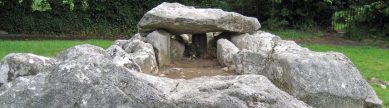
Despite the scribbled contents of a grubby, wine-stained notebook that I dragged along on the EPW and my eclectic, albeit desultory, readings in the Celtic area and era, over the last few months, nothing has sparked my interests. In truth, it may well be the other way around. I have this vague reluctance to commit myself to write about Celtic Iron Age, cropped-img_0322_edited1.jpg

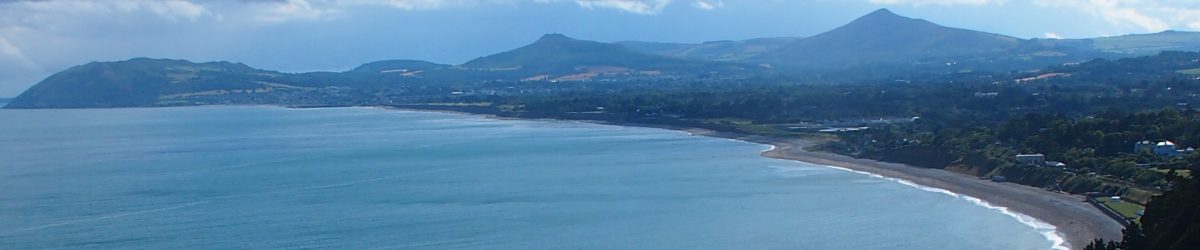
Travel,  OLYMPUS DIGITAL CAMERA

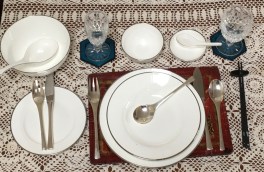
Food,  img_0046

Books cropped-bookcase.jpg

and those sorts of things on my blog so I have done absolutely nothing. Saying that nothing resonated with what I felt able to write allowed me to stagnate. I’ve barely sat down in front of the computer, let alone attempted to write something about my forays into Christmas cooking so, as Ian Dury intones, I have most certainly not been “a pencil squeezer”!

However, today was different. My kitchen clock, permanently stopped at 8:42, since before I went to Europe and the September calendar on the back of the door, were all physical manifestations, I was told, of my sloth, stagnation and inactivity. Half-heartedly defending myself from those (acknowledged) charges, I pointed out the clock is always right twice a day and who needs a paper calendar anyway, when we are all tooled up with smart wearable gadgets? Nevertheless, I put up a new calendar on the back of the kitchen door and threw the recalcitrant clock into the bin (no more K-Mart clocks for me, thank you very much), resolving to buy a proper clock as soon as possible.

Seems such an easy feng shui fix, doesn’t it – buy a new clock and put up a 2018 calendar? I’m sure there is more to it than that but let’s see. I suppose the proof will be in the pudding. How much will I have written by the end of this month (January), season (Summer) or year (2018)? Well, there’s a nice attempt at temporising if ever I saw one! I started out writing about a nosedive but I may be able to convert that downward plunge into a Bigglesian loop de loop. https://en.wikipedia.org/wiki/Biggles