


I have been guilty of ethnocentricity in my collection of posts about Celtic Iron Age Technology in that I related them solely to the culture and lifestyle associated with Ireland from roughly 300 BCE to the arrival of Christianity some 730 years later. Of course, no one in Ireland during that time would have considered themselves Celts – or Irish – for that matter, but Celtic is what they were.

This year, travelling through France, Switzerland, Austria, Slovakia, Croatia and Slovenia I realised that I was in the very heartlands of the people known by the Romans as Galli or Galatae and as Keltoi by the Greeks, but what they called themselves is conjecture. Prehistoric Bronze Age peoples, loosely linked by a common heritage, style, languages, customs and art, from the central and east central plains of Europe coalesced around 750 BCE, with the discovery and use of iron to become the most powerful people in Europe from about 450 BCE – 250 BCE.
Initially a nomadic, pastoral people who favoured the cow and the horse above all other, they adopted agriculture and settled down around La Tène in modern day Switzerland and around the Lake Neuchatel in modern Austria.
Archaeologists labelled certain cultures within the Late Bronze Age over view. The culture known as Urnfield, where the dead were cremated in pots, is considered ‘proto’ Celts followed by the Hallstatt – after a huge site in Austria – in 1200 BCE.
From 450 BCE, Celtic culture was marked by La Tène – after a lakeside site in Switzerland. There, a large quantity of material goods was found. With their discovery of iron, both in agricultural – better ploughshares – and in war – spears and swords – the Celts flooded new areas, urged on by increasing population and the need for more farmland.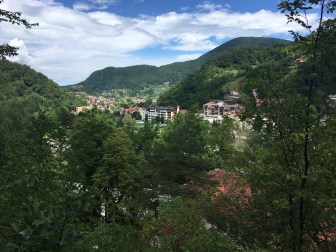
Spread out from their base in North East Europe, inevitably they came into contact, and met resistance, from the expanding Roman Empire. Pushed back north and west into Gaul, modern-day France, the Celts were hemmed in by Scandinavian tribes moving south themselves as Slavic tribes pushed in from the east.
Under pressure on all sides, the Celts retreated to Britain and Ireland before even those in Britain were pushed to the extremes of Scotland, Wales and Cornwall by the arrival of the Saxons and other Germanic and Scandinavian tribes with the last remnants of true Celtic culture ensconced in Ireland until the arrival of Christianity circa 400 A.D.
So goes the myth anyway, I suppose, but at the same time, I felt comfortable and at ease walking through these heartlands. Perhaps it was the beer!


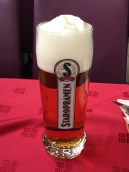
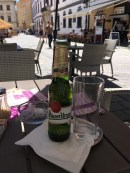
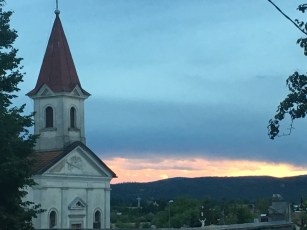 usually on offer in the same low-grade style cafe – sometimes the only thing available in villages along the route of my walk – so I congratulated myself when, after a fairly gruelling walk of 30k plus, I arrived in Postojna in south-western Slovenia and looked forward to a good meal.


 They should still be slightly pink inside.

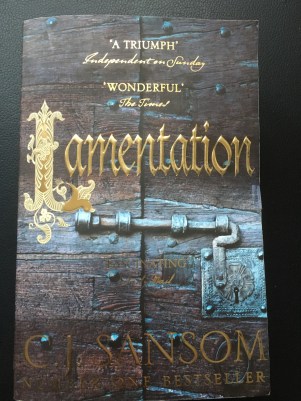 Without giving too much away, as Henry VIII vacillates between reform and traditionalist religion during the last months of his life, his court is divided between the Catholic and Protestant councillors vying to control Henry’s successor, the eight-year old Prince Edward. Henry’s last wife, the reformist Catherine Parr, formerly Catherine Latimer and the unrequited love interest of the solitary and melancholic sergeant -at-law, enlists his aid as she desperately fends off attacks from within the court and from mysterious and powerful influences in the world outside Whitehall.
 Red Branch Chronicles
You must be logged in to post a comment.