Cuba and Beyond – Part Two

Banana Republic

The above pejorative term for a country run as business for private profit, shared between the State and favoured monopolies, was first coined by the American writer O. Henry in 1904.

Take a wild guess – which country is the biggest producers of bananas in the world and is also the highest capital city in the world? (provided you don’t count La Paz in Bolivia, which is only the seat of government and not it’s constitutional capital). Bingo! Quito, at 2850 metres (or 9350 feet) above sea level, is the national capital of Ecuador.

Arriving late at night in Quito, via Panama from Havana, the last thing I expected was to be pulled out of line by customs as I strolled through. Politely but very insistently, they went through my bag with a fine toothcomb, checking the lining and the straps fairly thoroughly and insisting on seeing how much money I was carrying. No hassle, just an hour delay or so but in repacking my bag, I forgot my jar of vitamins! Quito seems a different ball game with fast, free wifi at the airport and hair-dryers in the hotel bathroom!

img_3233At about 2800 metres above sea level it is lovely and cool, compared to Cuba. What that also means is that it is a little hard to breathe, with not enough oxygen, for me, anyway, so I had to walk very slowly but even then I was panting a bit. Radically different too from Havana – market stalls here in Quito have more stock than entire shops did in Havana.

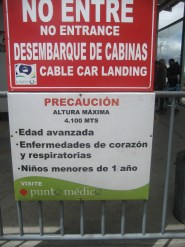
Surrounded by some active volcanoes, the air fresh and light I took a cable car up to 4100 metres and then tried to continue up hill on foot for another 45 minutes or so, each breath a rasp on the lungs hungrily sucking in the oxygen. img_3235img_3249Active volcanoes ringed this amazing city but I began to feel light-headed and aching so back down to the city level at about 2800 metres and into the Archbishop’s palace for a refreshing ale.
Staying in the historic centre which is beautiful and substantial – the old Spaniards knew how to build to last, or at least they made sure their slaves did so. Despite staying in the centre of the old historic part of Quito and asking policemen and newspaper sellers and other sundry hop-off-my-thumbs, I could not find a bar. All the bars and nightlife are tucked away in a different part of this vast city apparently and I need to take a taxi to “la zona rosa” for a refreshing beer. Luckily taxis are cheap, the flag fall starts at .50 U.S. cents and most rides cost less an 3 dollars!

Going into a bar just opening up for the evening trade, Dieter, the manager and part-owner of the bar was proud of his Spanish. From Jo’Burg, he told me with a strong South Africa accent, he had only been in Ecuador a short time when he had been mugged and had both his ankles broken. img_0648During his convalescence he had met Rosa his fiancé and it was with her father’s help that he was now part owner of a bar, he boasted. Insisting I try a local speciality, be busied himself preparing a Michelada – a salt encrusted beer mug filled with lager, lime juice, tomato juice, hot sauce and then decorated with an olive. Hmm.

Moving on to another bar, looking for a place to pass on my illegal tender, I found a busy corner place, dimly-lit both inside and out where the service appeared casual and lackadaisical among the young and carefree crowd. Ordering a jug of Margarita, knowing the twenty bucks would more than cover it, leaving a generous tip for the server, I sat back to enjoy the scene. Leaving the note protruding from the payment wallet tossed down on the table beside the empty jug, I slipped around the corner and into a taxi.

Leaving Quito tomorrow by bus and heading down to sea level to a fishing village called Canoa to get a beach bungalow and enjoy some beach life for a while. I am looking forward to the bus trip tomorrow down through the mountains. How the Spanish ever found their way up here in the first place is absolutely amazing. And then to build not just one but several mighty cities, and all under the control of less than 500 native Spaniards?

Dr. Denny, an American expat ran a seriously minimalist backpacker place just off the beach. Lurching slightly and gesturing with a beer bottle, he inducted me into Ecuadorian essentials. Wearing a stiletto on a chain around his neck, he showed me how he dealt with anyone trying to put any muscle on him, half pulling the stiletto out of its up-side down sheath on his chest. “It’s all they understand, man”, he assured me, explaining that everyone in Ecuador distrusts everyone else so that their taxis all have webcams and red panic buttons for both drivers and passengers. Sundays were dry, with no booze on sale, he warned me before solemnly leading me over to a shed in a corner of his property. Removing a heavy padlock he threw open the door to reveal a rough and ready bar with a shuttered window giving onto the side road.

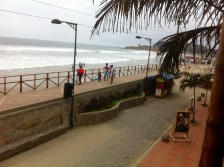
I am still always surprised when a season is actually given precise start and end dates. Summer officially ends on the first Monday of September with a suddenly barren beach, img_0650everything shuttered and closed down and the sea no longer looking inviting.   Chasing the sun, further south to Puerto Lopez and on down the coast to a bigger beach resort – Montañita – but while there were still cafes and hotels open, what would have been loud and bustling now seemed tawdry and shonky.img_0662
Intrigued by the sound of “why I kill” I moved on again, inland and east to Guayaquil – but found it dull despite its reputation for being a dangerous city – thank God!

Early the next morning my bus laboured up into the mountains to Cuenca, 2600 metres above the beaches. In a high valley, surrounded by mountains, small rivers, with solid stone bridges, sectioned the town. img_0693Refreshingly cool and sunny during the day but chilly at night, Cuenca is famous for its reviving use of chocolate in both drinks and cooking, and, left breathless after wandering over a local zoo spread over half a mountain, I determined to try chicken in chocolate as I sipped hot chocolate with cafe liquor – didn’t know that chocolate was a big speciality. Things seemed much cheaper here in the mountains compared to the lowlands so I thought I might stay for a few days before contemplating the next onward stage.

One attempt, so far, at a partial mugging in Cuenca and I just laughed and pushed a bit out of the danger. A barmaid in one of the pubs I stopped off to have a quiet drink in, warned me not to go near a certain corner nearby because, she said, there is always trouble there. Not knowing the area anyway, I blithely paid no attention to her directions of how to avoid that particular spot. When I eventually left to look for a late dinner, I almost immediately came to a corner where a group of young toughs moved meaningfully to block me as I approached. Without slowing down or faltering in any way, I grinned and nodded maniacally at them as I brushed through them and kept going. No harm done to them or me.


Pub Talk – ‘Stralia

The sandy path from my hotel led past a massive squat water tank and then skirted the muddy mangrove-lined banks of Roebuck Bay before turning sharply left down towards Broome’s Chinatown area. I don’t know quite what I was expecting but it was certainly more than the broad street with a row of corrugated iron, beach style, huts on either side of a boardwalk. Despite the temporary look to the shops, they were by no means cheap, despite their tawdriness. Anasstaia’s Pearls – one of about ten shops selling Broome Pearls, Argyle Diamonds and Kalgoorlie Gold – stood opposite The Sun Picture Theatre – the world’s longest operating picture gardens (an open air cinema without a garden), where the shows change weekly – which shared the building with a Broome Realty business.

Despite the guide book’s assertion that a stroll past these tourist shops with kitsch names like “Kimberley Kreations” and “Shells Galore” would “evoke a startling sense of days gone by”, the squashed and scattered beer cans in the small park at the top end of Chinatown gave me a more realistic sense of the present. The Roebuck Bay Hotel had a slightly sagging wooden boardwalk outside and several completely sodden people inside. The bar was a huge cavern of a room with three pool tables at one end leading off to the adjoining TAB section. Several plastic topped tables were scattered around the room and four arcade games were lined bravely up against one wall.

A large notice behind the broad jarrah topped bar stated that footwear must be worn at all times and that no sarongs or singlets were permitted at any time. Thongs were allowed until 6:00 PM but men’s dress must be clean and tidy. A tall, bearded man slouched at one end of the bar wearing a collarless, horizontally striped T-shirt and vertically striped torn shorts that may once have been blue and white. I couldn’t see his feet, but it was a fair guess that he was wearing thongs. A narrow metal gutter, presumably for cigarette butts and rubbish ran along the foot of the bar but this had been tipped over and concealed his feet. Groups of overweight Aborigines lounged, shouting, at the tables and clustered noisily around the pool tables. A slatternly woman of indeterminate age with long, grey-streaked, untidy hair shrieked “C’mere you” at someone – was it me? as I edged into line at the bar. Australia’s best – Swan Gold and Emu Draft – were the only draft beers on offer so I ordered a middy before I noticed that all the men were drinking tinnies out of oversize Styrofoam stubby holders. The bearded man swung himself violently in my direction and thrust out a large hand at me “The name’s Greg, mate and this here’s Bill – the stupid bastard‘s just got himself divorced. Shit happens, eh?” As if to confirm this, Bill, ducked his head nervously and uncrossed his thonged feet.

“You’re a tourist, or what?” Greg asked, relighting the stub of a hand rolled cigarette.

I told them I was there for a conference and this was received in silence. Hastening to fill the gap, I asked Greg if he was involved in the pearling business without mentioning that he fitted my stereotypical idea of a cutthroat privateer but he was more interested in pointing out to Bill that divorce was not the end of the road.

“Jeez, mate, I jus’ come up from Perth 2 weeks ago cos I couldn’t pay me fines, y’know and then last week I gave the missus a ring in Brisbane and she tol’ me that she wanted a divorce. Jeez, I jus’ doan know”.

“What are you going to do now?” I asked him.

“Oh I reckon I’ll hang on here a bit and see what happens, I reckon I can pick up a bit of work here, y’know”.

A small, natty-looking, middle aged man finished his tinnie of Emu and got up from the table he was sharing with a blowsy Aboriginal woman, whispered something to her and walked towards the door. The Aboriginal woman moaned something I didn’t catch and then carefully checked his tinnie to see if there was anything left in it. Seeing me looking at her, she fumbled up the coins on the table and lurched towards me.

“Wha’s you name?” she demanded,

“Stephen” I said. She rolled one eye at me and said “Wha’?” “Stephen,” I repeated, “What’s yours?”

“Buy usmob a drink but”, she said, ignoring my question.

“Tell her to piss off”, Greg advised from the other side of me.

“What’s your name?” I repeated inanely. A tremendous effort wrinkled her weathered looking face and again one eye rolled at me “Name’s Margritta,” she slurred. “Whe’ you from? You bin come Darwin?”

“No”, I said, “I come from Ireland.”

“I knew youse was a paddy,” Greg said. “I was thinkin’ youse wasn’t a pom”.

Again a puzzled frown creased Magritta’s face and then enlightenment, “Ireland” she muttered. There was a moment’s reflective silence and then that odd roll of the eye at me again. “When Irish eyes are smilin…” she crooned at me, and then waited for a response. While I desperately sought one, she leaned precariously back on her stool and flung her arms wide in my direction and burst into “When Irish eyes are smilin…” again. This time I was ready. “That’s right,” I said, “That’s as much as I know, what comes next?”

Magritta sniggered knowingly and lurched a bit closer to me “C’mere you, buy usmob a drink.”

Before I could answer, there was a loud crash from the back of the barroom. The small, blonde barmaid behind the bar said “Danny” in a clear, calm voice and a square, young giant, with a crew-cut and a Roebuck Bay Hotel T-shirt stretched across his massive chest, came out from some back room and stood beside the barmaid, frowning impassively towards the back where an Aboriginal youth shamefacedly picked himself and his chair up off the floor to hoots of derisive laughter from his mates.

“C’mon, Stevo, I’ll give youse lot a game of pool” Greg suggested.

“You’ll just be in time for the end of happy hour if you order now” the barmaid piped up so I bought tinnies for myself, Greg, Bill and Magritta before following Greg and an unsteady Bill towards a vacant pool table.

“Jeez, mate, where did youse learn to hold a cue like that?” Greg burst out as I missed a simple shot. “Look, do it like this, see, bend your hand at the knuckles here and raise this finger up like this, see, an’ you’ve got a perfect bridge – no, like this, see, do this, can you bend your hand like this? Like you’re waving goodbye, yeah, like that, see, steady as a rock”.

“She’ll be right,” Bill chimed in as I contorted my hand into the required shape, feeling inept. “I guess I’ve always believed that proficiency in pool indicated a youth misspent” I joked. Greg paused, beer in one hand, cigarette and cue in the other hand and looked at me seriously “I’d say that’s fair enough” he agreed, “Whaddaya reckon on that one, Bill, eh”?

Magritta, lurching on her stool at the bar, leered, waved her tinnie at me and burst into “Irish eyes” again.

“Y’ver been divorced, Steve?” Greg demanded as he effortlessly potted three balls in a row.

“Yep, I said, “a few years ago”.

“Me too,” he replied. “See, Bill, what I was tellin’ you, shit happens. Best thing that ever happened to me, though.”

“Why’s that?” I wondered.

“Cos I married a Fiji princess then and I got myself a whole swag of land out in the Cook Islands. We’re gonna build us a swank resort out there soon for the tourists once I get my act together here in Broome. But I tell you, Bill, women, who needs ‘em, eh?”

Bill continued to look doubtful while another burst of singing erupted from Margritta as a group of fat, swaying women joined her.

“Mind you,” Greg pointed out, gesturing with his thumb over his shoulder, “She’s a bit of all right, int’she?” “She” was a blonde bikini-ed hussy draped over a leopard skin pillion of a Harley Davidson motorcycle poster, tacked to the wall behind us.

The noise, cigarette smoke and the crash of falling people and chairs were was building up to such a state that the square headed young man in the crew-cut, that the bar maid had called Danny, now took up a permanent stand down one end of the room, a fixed scowl on his young face.

Greg suggested going down to the picture gardens to see what was on and while Bill returned to his morose position at the bar, we sidestepped lurching groups of Aboriginals who stretched out long arms in half-hearted attempts to detain us. Greg weaved and ducked his way towards the door. “That’s Thursday for you, mate, it goes to their head, a bit, you know. When I looked puzzled at him, he added “Social Security, mate, why do you reckon they were all boozin’ up, but?”

Outside the Sun Picture Theatre, there was a decorous crowd of young people milling about, leaning on the roo bars of 4WD’s and eyeing the girls. Inside the theatre was a display of early film projectors and signed photos of famous people who had attended. Rows of linked deckchairs were lined up under ancient looking plane propeller-type fans dangling from a high wooden roof. Further down towards the screen similar deckchairs were laid out under the stars. A sign at the kiosk pointed out that no matter what the weather the show would go on.

Outside the theatre, Greg met a crowd of people he knew from ‘aut-ah town’ and despite noisy invitations, I decided not to return to the Roebuck Bay hotel with them.

Walking back the way I had come, I had to step over a group of sleeping people stretched every which way on the warm sand near the water tower, the squashed remains of a case of Emu draft beer scattered around them. One of them mumbled something at me as I walked past but I doubt it was “When Irish eyes are smiling”, so I kept going


Cuba and Beyond

Part One

Fidel in Cuba died recently and I felt smugly pleased that I had made it to that island before he had passed away. Well done, I have to say, for standing up – alone (except for massive Russian help, I suppose, in the earlier days) – to the regional superpower and for sticking to his guns over the last three plus decades.

I remember being exhausted when I thought about how I arrived – the flight from Sydney to Dallas was 15 hours! The amazing thing was that I left Sydney at 1PM on Wednesday 12 August and arrived here in Dallas 15 minutes later on Wednesday 12 August. Still haven’t worked that out. However, on again to Mexico City where I’ll stay the night before leaving for Havana the next morning!

Stayed in a lovely hostel in the Centro Historico in Mexico City and caught my early morning flight to “La Habana” the next day. Arrived safely but a bit tired after nearly 26 hours actual flying time. Stayed in a very nice “casa particulare” which is a private home providing bed and breakfast.  The Cuban government under Raoul, Fidel’s brother, recently decided to allow private individuals to rent a room in their homes to tourists. Fascinated by the disrepair everywhere, I went out for a walk the first evening and got lost immediately – took me 4 hours to find the pension again.

fullsizeoutput_fb7Havana is amazing – Like going back in time – a jumble of narrow streets, all dug up and rough, crumbling mildewed buildings propped up with wooden beams and here and there a splash of bright paint covering up the ruins! If I thought the streets in Hanoi were confusing and the rough paths in Saigon were not for pedestrians, here in Havana everything is worse – the streets are a jumble of broken pavements and street signs are few and not very clear.  So far I have got lost every single time within 5 minutes of leaving my “casa” and I end up walking around in a maze of narrow streets, stopping whenever I can to gulp bottled water and find a shady cafe where I can sit, relax, read, study Spanish and do people watching.  All the men are stick thin, mostly, while the women have the biggest bums and boobs I have ever seen.  I hadn’t realised how black the people are – all shades really from shiny black African types to milky coffee colours. The only peopfullsizeoutput_fb6le who speak English are the touts who offer cigars, taxis and tours – “hello, welcome to Cuba, enjoy your holiday – where are you from? No, no, wait, listen to me, I don’t want your money for myself but if you can buy some oil or milk for my baby ….“. And then there is the music – every bar seems to have a traveling band who play for 30 minutes or so before passing the hat around! Where I had dinner last night – a grilled fish with rice and black beans – the band had a resident couple in a flamboyant costume who danced salsa for tips.  Everything is cheap but not too cheap in Havana and nothing is free of course – even sitting in a park will attract touts and sometimes it is easier to give a few coins than to constantly refuse.

I ended up staying 6 nights and then got a 4 hour bus ride to Viñales a rural town to the west of Habana where the main occupation seems to be sitting on a verandah in a rocking chair, drinking Ron! Very quiet and calm compared to Havana which was a bit too money hungry for my liking.  Here in the village everything seems to be a lot slower as was img_0623the Internet which was intermittent and chaotic.  Queued for more than an hour to buy a internet card valid for one hour and which must be used on the pavement outside the telephone office in order to use the connection there.  Weird system, or maybe no system at all. I really need to book a flight out of Cuba before it is too late because the music, the salsa dancing, the food, cocktails are all so lovely and laid back. Probably going to leave the home stay in Viñales tomorrow but the food is incredible – both the quantity and the quality – I’ve eaten nothing but seafood and last night my lobster was too big for me to finish! – and head off to a beach nearby and stay there for a few days – long enough to get laundry done! All the bars everywhere have a roster of bands playing great salsa music for about 3 or 4 songs before they pass the hat around and try to sell their cd.    The last night in Viñales, there was a ten-man band belting out the music and eight extraordinary dancers at the cultural centre where – of course both the band and the dancers expected – and were well worth – the minimal tips involved.

Left Vinales and took a bus down to the south coast to a town called Cienfuegos where the casa particulare, while pleasant enough, was miles out of town.  I didn’t really like the town despite its fantastic lovely buildings as it was stinking hot and there were not enough bars.  Decided to leave the next day and go to Trinidad and took a taxi to the bus station where I queued for the bus ticket and then queued again to get a seat number on the bus but when the bus finally arrived there were no seat numbers so I just sat down.  Cubans have to queue for everything here – God help them! In direct contrast to Cienfuegos, img_0632Trinidad was lively and colourful – narrow, cobbled streets, loads of bars, great music and fantastic restaurants.  Sitting on a rooftop terrace enjoying the first mojito of the day, listening to another band with a fat lady belting out the songs and swaying to the rhythm when the singer asked me to dance and tried to show me the steps, faster and faster, swaying all the time.  Of course I had to give her a dollar then.  Great fun, though, but God, the sweat pours out of me.

Left Trinidad worn out and hired a taxi for the 12k run to the coast – Playa Ancon, which looked lovely but the hotel was $125 a night – a bit rich for my blood – so back in the taxi, another $7 and down the road to a local fishing village where I found a lovely clean room in a private home where the host also offers breakfast and dinner.  This morning, before leaving Trinidad, I had breakfast in the  casa – a pot of strong black coffee, a pot of hot milk, a basket of toast, four small pancakes, a plate of sliced cheese and ham,  a small omelette, a HUGE jug of fresh mango juice, a plate of papaya, mango and pineapple and a litre of fresh yogurt – absolutely amazing.  Enough to last me for days – or until dinner tonight and I’ve already ordered fish.

Back in Havana and sitting on the balcony of my casa particulare and enjoying the afternoon breeze and listening to the noise of the street below me – groups of young kids kicking a punctured ball around and singing “ole, ole, ole” (probably the worst “music” I have heard since I arrived). Planning to take a ferry ride across the harbour to a fantastic, img_0572fairytale fort on the other side the next day.  Time for my evening cocktail as I try to chat in Spanish to the old man, Gomez and his wife, Miranda who are renting me the room, a/c, private bathroom, big bed and balcony plus a huge breakfast Trying to keep the spending down but had to splash out at the loo today in a hotel! No free lunches here – everything has to be paid for. I’ve enjoyed Cuba but now, it’s getting on time for me to move on and I plan to fly to Quito, which is the second highest capital city in the world, in Ecuador by the end of the month.  Should be cool there, I’d imagine! I drip with sweat the whole time here and my sandals stink despite me washing and scrubbing them every night.
Cuba is really a step back in time. Queues are paramount, even to enter the bank, only one person allowed in at a time, or to buy a bus ticket, or the exchange booth but as yet I have not seen an ordinary shop as we know it. Plenty of souvenirs on sale as well as exquisite lace and embroidered everything but I haven’t bought anything yet, except for food and drinks.  Pathetic in loads of ways, queues in the morning for bread and oil, no internet to speak of, battered and broken down old Russian Ladas and ancient Chevies and Caddies, mildewed and crumbling buildings, incredibly fat ladies squeezed into tight Lycra, but God, the music, the rum, the ambience, the sheer decrepitness of it all somehow combines to provide an out of world feeling.  In the bars at night, there was music in the air and revolution in the air. A rum mojito – although I tended to prefer daiquiris – was an experience as no barman worth his salt would ever dream of using a measure. They just up-ended the bottle leaving barely a fraction for a splash of fizzy water. It became my undoing as they would offen enquire if the drink was “fuerte” enough and of course, being who I am, I would shake my head and pass the glass over where they would freshen it for me. Not much else to say about Cuba mainly because I don’t remember my alcoholic nights which often began shortly after noon for the above reasons but overall, I’d have to say a good time. Nevertheless, glad to leave after nearly 3 weeks there  and flying onto Quito, via Panama, in Ecuador. From there, I don’t know exactly what my plans are but I just find the heat and the humidity here in Cuba a bit draining.  Here’s hoping the cooler air further south will revive me as Quito is something like 2,500 metres above sea level. I doubt I will complain about the heat there. And, there should be regular internet access there. Had enough of poor old Cuba.


Chugging Along & On the Road

Continuing on from – Off the Rails in Hong Kong

Part 4

Chugging Along

OLYMPUS DIGITAL CAMERA

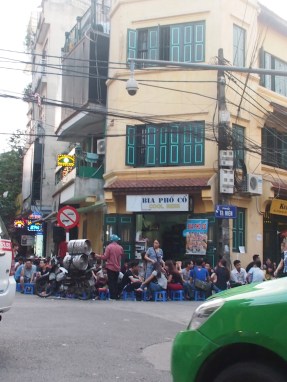
Back to cultured and reserved – in comparison to brash and reckless Saigon – Hanoi and time to start looking for the next train on the journey – the Hanoi to Da Nang leg which was going to be the longest leg so far at about 14 hours. My train south wasn’t for another few hours. Ignoring the blandishments of The Irish Wolfhound Pub, I sat on a tiny plastic stool on a street corner at some busy intersection in the old town and drank bia hoi, or so called fresh or draught beer which, for some reason was incredibly cheaper than drinking beer in a bar. Each generous glass of bia hoi cost 5,000 dong (about US 25 cents) as opposed to the more usual 25,000 or 30,000 dong in bars.

I had booked a sleeper to Da Nang yet every backpacker I talked to mentioned that they were going to Hue (Huey, as one girl pronounced it). Hmm, thinks I, have I made a mistake here, I wonder. No-one seemed to be that interested in Da Nang! Sure enough, at Hue at about 10 the following morning, half the train emptied out as I strolled down the swaying corridor. Nevertheless, the best part of the ride was between Hue and Danang as we seemed to crawl along a series of precipitous cliffs looking down on deserted rocky beaches on one side while on the other side, rice paddies with muddy water buffaloes standing passive sentinel, stretched away to misty mountains and outcroppings and I congratulated myself on that.

OLYMPUS DIGITAL CAMERA

Arriving in Da Nang at about 2:30 Pm – the train really went slowly along the cliff face – I was met with the usual gaggle of taxi and motorbike touts but shouldering my backpack, I marched through them and started to wander. Whenever I came to a junction I turned right, hoping that something appealing would appear but in sharp contrast to Hanoi – and more so to Saigon, the streets seemed oddly empty, both of people and traffic. Why, it was perfectly feasible to cross junctions with barely a look to the left, right, behind, in front, left and right again before crossing.   Beginning to get hungry – the last time I had eaten was a good 20 hours previously – I was getting desperate for a coffee and something – anything – to eat when a large motorbike sidled up beside me and a guy politely asked if he could help me with directions.

Turned out he was an “Easy Rider” guy, one of a growing band of semi-professional drivers and guides who specialize in taking travellers off the beaten path on do-it-yourself style tours. I had used an Easy Rider before in Dalat and had a great day out with them. You give them the general direction you might like to follow and they take you there by back roads, over rivers and sand dunes, through the mountains and down the valleys in a way that scorns the tour bus.

On the Road

Just take me someplace for a coffee and then I’ll decide, I told Binh. It turned out that we had been born in the same month and year although he claimed to be a year older as an extra year had been added on to his birth year during the recent Tet. (Most Vietnamese do not celebrate their actual birthdate – birthdays are a western phenomena. Instead, every Vietnamese starts off at the age of one and then gets an extra year tacked on every Lunar New Year, hence Binh’s seniority.

Anyway, the upshot of the whole deal was that Binh convinced me to saddle up and leave Da Nang immediately and head on up the road to Hoi An about 45k away and finishing the coffee, I put on a real motorbike helmet – not one of the more usual, plastic coated tin hats most people seem to favour – swung my leg, with some difficulty, over the back support and settled on to another Easy Rider drive.

Whipping down the coast highway, Da Nang seemed to be experiencing a construction book in luxury holiday and golf resorts. The beach side of the road was lined with immense gates and walls with immaculate landscaping but both the accommodation and the beach were out of sight. Skirting by the ruins of the largest US air base during the American War, the other side of the road was taken up by lush green fairways for the several golf courses that looked squeaky new and manicured.OLYMPUS DIGITAL CAMERAOLYMPUS DIGITAL CAMERA

And then we were into Hoi An and Binh obligingly picked a rather fancy looking hotel right on the river, a few hundred metres from the iconic Japanese bridge which has become a hallmark for this World Heritage town. Luckily, the hotel while looking quite fancy – it even had a swimming pool – was not exorbitant and well within my budget.OLYMPUS DIGITAL CAMERA

Before he gave me directions to where I could get a cold beer, Binh persuaded me to sign up for a full day motorbike trip around the surrounding countryside, promising an array of sights culminating in Vietnam’s own “Angkor Wat”, the ruined Champa kingdom at My Son.  Ruined was haerdly the word for it.  Devastated time and war blasdted would be more accurte.4  US marines had “saved” the site from the Vietcong back in the day by pulverising the remaining buildings and temples, apparently.

Spumante and Cailiflower

The first time I had been to Italy was in the early seventies when it took me six days and nights to hitchhike down from Amsterdam to Rome to meet my sister who turned out to have left five days before I eventually arrived. At that time, I remember turning down the offer of a lift to a place called Firenze because I wanted to go to a place called Florence. But that was a long time ago and then I had arrived in Milan, penniless and without any Italian whatsoever, to teach English at the British Council.

The Council, in a rather lordly way, having been informed of my arrival, had booked me into a rather expensive pensione – the Albergo nell’ Galleria in one of the smarter areas of the city, near the Piazza Duomo, the heart of urbane Milan. My first thought on seeing the rather exquisite setting, with its canopied four-poster bed, thick, musty carpet, the walls covered in a dark, flocked wallpaper and its views of the massive Cathedral out of the balconied windows was “Ohmigod, how am I going to be able to pay for all of this?”

That first afternoon, sprawled on the bed, counting the few lira I had, I felt a distinct uneasiness. The day was dark and drear and the majesty of the Duomo dwarfed my spirits. I had yet to begin work and already the prospect of being in debt was weighing heavily upon me. The Allbergo was old and fusty, even the furniture seemed antique, dark, heavy wood, ornately carved, while the coat-rack on the wall seemed to be unnecessarily convoluted, and was not even placed on the wall properly, as my coat seemed to be hanging crookedly. In fact, as I glared at it with irritation, the coat seemed to be swaying as if it were a pendulum, while a dull, far away rumbling emanated, it seemed, from the bowels of the old hotel.

It was only later the next day that I learned that I had survived my first earthquake, when a minor quake had struck the northern Po valley. Only one casualty was reported, a 79 year old man had died when he had tried to steady his ancient Grundig TV set which had nevertheless toppled over, killing him instantly.

However, that was more than enough excuse for me to withdraw gracefully from the Albergo, and go looking for cheaper accommodation elsewhere.

I found it in the Via Rovoletto, a narrow, curving alley, in a warren of similar streets, dotted with cheap-looking greasy-spoon type “restorantes” and even seedier looking hotels, outside of which blowsy, middle-aged women, in tight miniskirts huddled in thick jackets against the cold, seemed to be loitering unnecessarily. Hotel Rovoletto had glass doors with its name stamped in faded gold lettering, a thin, wine red carpet in the lobby, two plastic covered armchairs on either side of a tall urn-like ceramic vase holding artificial flowers and a reception desk.

The elderly middle-aged man behind the desk seemed not to comprehend that I actually wanted to book a room and kept looking around him with an air of mystified bewilderment. Between his lack of English and my lack of Italian, what should have been quite a simple transaction between a guest and a hotel receptionist turned into a protracted pantomime with me placing my clasped hands on the side of my face, closing my eyes, snoring loudly, then gesturing at my chest and finally airily waving my hand above my head to indicate the, no doubt, numerous and vacant rooms the hotel undoubtedly had, while he shrugged his fat shoulders, brushed the back of his fingers under his unshaven chin, shook his head, rolled his eyes and seemed to do everything possible to deter me.

Finally in exasperation, I pointed at the keys hanging up on the wall behind him and, proffering my passport in an attempt to distract him, I tried to reach over and help myself to one. More, to me, inane explanations which finally subsided into a marked grudging acceptance when I flourished my rapidly thinning roll of Lire. After signing various forms and having him tediously check my passport details, I was eventually led up a flight of narrow steps, barely covered with a well-worn red carpet, unraveling at the edges. By the third floor, all pretense at class had vanished, as had the carpet, and the long, bare corridor was eerily lit by a naked light globe hanging from a frayed wire.

The room was dark and dowdy. The bed rickety, with a noticeable dip in the mattress so that no matter which side of the bed I lay on, within seconds I had rolled into the trough in the middle, and the thin gray sheets had been laundered so often that they were almost transparent except where they had been patched and repatched over the years. Clearly, Hotel Rovoletto would not be finding a place in any of the more respectable accommodation guides to Italy’s fashion capital as I was to find out more explicitly later.

That night, returning from a fantastically robust, and ultra cheap meal of pasta and beans at an underground cellar of a restaurant called Zia Carlotta, I was accosted by several stout women, lingering under the dim street lighting of Via Rovoletto. Bundled in thick coats against the winter dampness of Milan, the women made coarse gestures and cackled amongst themselves as I walked by, still naively uncomprehending the type of area I had chosen to stay in.

As I queued at the reception desk for my key, a stream of “ballerini della notte”as I later heard them rather charitably described, ascended and descended the shabby stairs with occasional shame-faced men in tow. The reluctance and bewilderment on the part of the desk clerk, the mean strip of carpet running only to the second floor, the thin, well-used sheets, the loitering women, the hoarse cackling at my expense all seemed clear now.

I had probably been living in Milan for well over a year, but no longer at the Hotel Rovoletto which I had left as soon as I could afford to, when my brother casually mentioned in a telephone conversation that one of the advantages of living there must be the ability to go into a bar and have a glass of sparkling wine at any time. I agreed that it was and the conversation turned to other things.

As soon as was decently possible I rang off and rushed to the nearest bar and asked for a glass of sparkling wine (Spumante). It had simply never occurred to me before. I was aghast at the time I had wasted and from that point on, I made a beast of myself. I particularly liked it when I’d ask for a glass and the barman would fish out these bottles from cooled, sunken tubes behind the stainless steel bar only to find them empty and would instantly oblige by opening a fresh bottle, just for me.

I enjoyed the clear, fruity taste of the Spumante so much that I determined to make a special trip to Asti just to pay homage to the most famous of all the spumantes, the Asti Spumante.

And it was in Asti that I believe I first fell in love with food per se.

The restaurant wasn’t fancy, but it was lunchtime and I was hungry. The town was empty – it was autumn and no tourists were about and what locals there were, were not eating at this particular restaurant. It was plain and homely with traditional red checked tablecloths, while the proprietors, a massively overweight, elderly senora dressed in faded black clothes and heavy brown nylon stockings busied herself behind a high counter, ignoring me as I attempted to understand the hand-written menu. Not quite sure what I was ordering, with the exception of the Spumante, I pointed at various items and attempted to engage her in conversation.

“Questo, e buono?” (This, is good?) but all I received in return was a brusque nod so that all I knew was that I was ordering some kind of vegetable dish. I ended up with a surprisingly simple dish but I had never eaten anything as delicious as those deep-fried cauliflower. Such was my naivety at the time that I thought, by praising the dish and the senora in my faulty Italian and ordering more, she would be flattered and heap more on my plate in true home style hospitality. More was heaped on my plate certainly, but the shrewdness of the country folk ran true and more was heaped on my eventual bill also.

Culture Shock in the USA

The most exciting thing about overseas travel is the novelty and oddness you can come across without any warning whatsoever. This was especially true for me in, of all places, America where the utter strangeness of some things, in what I somewhat foolishly thought should be a familiar situation, completely banjaxed me. Coming from Ireland and knowing that St. Brendan and other intrepid Irishmen had colonized America long before Erik the Red and the Vikings and nearly a thousand years before that upstart Columbus, I automatically assumed that everything would be familiar, only more so, as it were, and that I would be above and beyond culture shock.

However, to be fair, I suppose it worked both ways. I’m pretty sure I shocked a fair few people there as well! For most of the preceding year I had been a vegetarian for no particular reason other than it seemed like a good idea at the time. Anyhow, on one of my first nights in New York City, wandering along 5th Avenue, I stopped here and there in bars, many of which were adorned with shamrocks and other Irish insignia. I was treated like visiting royalty on account of my “fresh” Irish accent but I began to develop a general awareness that I was in dire need of sustenance, other than the liquid kind, if I were to continue enjoying New York hospitality. Lurching into the nearest fast food restaurant, I sat boldly at the counter and squinted short-sightedly at the menu on the wall.

“Wha’ll it be, honey?” a large black lady behind the counter asked, already serving me a tall glass of iced water without me asking for it. “A cheese bugger with reg’lar fries”, I slurred, rather proud of my ability to have picked up appropriate Americanisms so quickly. To my horror, I received a massive slab of minced meat fashioned into a crude rissole, sandwiched in a colossal bun, adorned with fried onion rings and slices of impossibly large gherkins while several kilos of french fries vied for room on a platter the size of a coffee table.

“Sorry,” I mumbled, embarrassed at the unaccustomed task of sending food back, “I ordered a cheese burger an’ this,” I gestured wildly at the plate in front of me, upsetting the glass of water, “has meat in it!” Credit where credit is due, despite the large lady’s obvious amazement, she did attempt to reason with me by pointing out that a cheeseburger always had two main components – cheese and a burger. Looking back now, I cringe at my naievety.

Best to leave New York, I thought, the following morning so I set out to discover, like so many before me, the “real” America. I was looking for diners, steamed up windows, long shining, stainless steel counter tops, a juke box in the corner, pony-tailed girls in bobby socks (whatever they were) jitter-bugging away, cheerful, wise-cracking, gum-chewing counter hands, serving Mom’s apple pie, with coffee on the side and ice cream soda or floats or spiders or whatever they were called in that particular neck of the woods. I had already had a brush with the variety of names for fillings on a bread base – open-faced Rubens, hoagies, heroes, submarines and they are only the ones I can remember now. The relatively simple task of ordering a plain, honest-to-God sandwich involved such a plethora of choices – white, whole wheat, country wheat or rye breads, rolls, bagels, ciabattas and then butter, mayonnaise or margarine – that I began to suspect that they were deliberately trying to bamboozle me.

Driving out past the lunar landscapes of New Jersey and Allentown and into the Dutch Apple State, the scenery changed to Bonanza style country and so did the people. Gone was the elegance of 5th Ave. The further west we went, the further my illusions of familiarity with the culture receded. By the time I hit Kentucky, wiry, muscular types in greasy, blue jean overalls, with heavy working boots became the norm. Pickup trucks, a rifle or shotgun prominently displayed in the back window, constantly passed me, both ways. Just as strange was stopping at a gas station to fill up and seeing ice-cold six-packs of beer openly on sale. Eager to take advantage, I, of course, bought a six-pack of Ballantyne Ale, (a different rebus inside each bottle cap!).

Stranger still was the fact that no one seemed to understand a word I ever said. “Whyat’s thad yew say-id, byoh,” they’d drawl. Perplexed looks would invariably greet any request I might make, while they’d push back stained baseball caps and scratch sun-tanned foreheads. Repeated attempts to make myself clear failed to clear the hurdle of their incomprehension at my accent, so much so that I began to revise my earlier belief that Ireland had colonized America. Not this part, obviously.

The bluegrass (which was just ordinary green) area around Louisville (pronounced Lou’Vil) with its rolling countryside, winding country lanes and fertile fields provided everything a red-blooded male could possibly want – guns, pickup trucks, baseball caps, horse racing, beer available practically at every red light and red meat in every variety, shape or form, as I was to learn. So, determined to try something a real man would eat, I pulled into a diner on the outskirts of some small burg. Two fat ladies, with soiled tea towels casually tossed over the shoulders of their too-tight uniforms, behind the counter burst into laughter when I asked what they would recommend

“Why, honey, everythin’ we gots is just fine and personally recommended.” Gales of laughter followed this, along with much rolling of the eyes and patting fat stomachs and haunches. “How y’all want yore eggs?”

Oh God, I thought to myself, here we go again, over easy, sunny side up, over medium, scrambled, poached, what other bloody variations are they going to spring on me next?

“Ok, ladies, I think I’ll have two eggs, sunny side up and …ehhh, what’s this turkey fries, what does that mean?” I said, pointing to an item on the plastic covered, hand written menu.

As soon as I had said it, a strange silence fell and the two ladies exchanged quick, flustered glances with each other. “Way-hall, y’all know honey, fries are like, y’all know, Rocky Mountain Oysters or …”

“Ranch fries,” the other lady butted in. “All the folks round here shore like ‘em.”

“Yes, but what are they, exactly? What does it mean?” I persisted. “I just don’t know what they are. Are they the same as ..?” I hesitated and glanced down at the menu again. “Are they the same as lamb fries?”

“Yessiree, they are and they aren’t. That is to say, the lamb fries are a bit bigger’n the turkey fries but Ah do believe they are ev’ry bit as tasty and delicious, I do assure y’all”

Totally confused at this stage, I looked around only to meet looks of incomprehension on the other punters’ faces, mingled, perhaps, with warning looks.

But too late, I was already ploughing on. “I’m sure they are as tasty and delicious as you say, but I’d just like to know what they are, I mean, I’ve never heard of them and I just …”, my voice tailed off as the two ladies, now visibly annoyed with me, their once smiling faces now set and stern, as if in suet, backed away from the booth table where I was sitting, taking the grubby menu with them.”Harold!” One of them hollered, “There’s a jinelmun out here askin’ a mighty load o’ questions of us ladies and we think it might be better if y’all came out here right now.”

The swing door behind the counter into the kitchen swung open with a crash and a short, stocky man, the ball of his belly held tight by a dirty apron, appeared. His crew-cut head glistened with sweat while the redness of his face highlighted a white crust on the corner of his mouth. For some reason, he was holding a baseball bat across his chest in the port position I had seem marines holding their rifles just recently at the Fort Knox Military Reservation. It was only when he sauntered across to my table snapping the bat into the palm of his hand demanding to know what the problem was, that I began to realize that there might actually be a problem after all.

“No problem, actually,” I began. It’s just that these ladies mentioned turkey fries to me and I’m not quite sure what they are, that’s all. They said something about oysters and the thing is, I’m just not too sure … I tapered off, as he continued to give me a hard stare.   “Y’all not from around here, is that it, son?” Perhaps it was my accent or maybe it finally dawned on him that I had no idea what turkey or lamb fries were. After all, it wasn’t that long ago when I didn’t know what a cheeseburger was, for that matter. He wasn’t to know that of course but his tone changed completely as he slapped a massive, meaty hand on my shoulder and levered me to my feet. “C’mon with me, son, Ah guess, Ah’ll jist have to show y’all what we folk mean by fries. Y’all sure now y’all nivir hear tell of Montana Tendergroin or Mountain Oysters?”

Shaking my head, I was led to a dented chest freezer, which Harold jerked open violently before he began rummaging among the cardboard boxes and plastic sacks. Finally, he pulled out a squashed box of frozen orbs, with a faint tracing of blue and red lines on and around them. Each knob was about the size of a baby’s fist and a horrible suspicion began to dawn on me. But turkey ones? my mind shouted, surely they can’t be …

“Downhere, y’all see, folks round here like to eat these – I b’lieve in Yerp they call ‘em sweetbread and Ah’ll tell y’all they shore are sweet, bud Ah doan’ know where they gets the bread from. Turkey fries, now are a bit different because we got to kill ourselves a fine burd to get our hands on them fries – why, they’re well tucked up behind the kidneys. Now, which ones y’all want to try first? Ah kin recommend the …hey, where in tarnation y’all going now?”

Thank God I still had a few cold bottles of Ballantyne Ale in the cooler in the back of the car which helped to wash away the very idea of eating turkey or lamb balls.

Back on Track (part 3)

Continuing on from – Off the Rails in Hong Kong

And then, miraculously, order prevailed. Smart uniformed guards stood attentively beside each train carriage and, as it turned out, mine was the first carriage directly opposite where I wase spat out.

Compartment No. 3 was easy to find as was my bottom berths number 5  but unfortunately my berth was already occupied by an outstretched man defiantly smoking despite the no smoking sign above his head. Reluctant at first to go – he was already tucking into his styrofoamed packaged dinner with his bag stowed under my bunk – and it was only with some urging on my part – brandishing ticket under his nose, jabbing my finger at the numbered berth, shrugging disconsolatedly (but sternly) and that sort of nonsense that he shuffled his bare feet into his grubby sandals and buggered off, muttering audibly, no doubt about round-eyed foreign devils.

Punctually, the train jerked off at 6:30 and it was time for another few nips from the diminishing bottle of Stolly peach. Disappointingly, the restaurant car appear to be closed to passengers as once again the train official were occupying all tables but I managed to persuade them of my thirst and a 5 yuan can of warm Pabst Blue Ribbon beer was produced for me!

About four hours later the train lurched to a stop at the Chinese Border. Passports were collected and checked for exit forms and then everyone with their luggage had to get off the train. Luggage was – for the fourth time? – scanned while us passengers huddled sleepily together. And then pick up the bags and back on the train.

Passports were handed back just as the train lumbered past the final Chinese border checkpoint and I was officially back in Vietnam. Less than an hour later, the Vietnamese Border post where once again all bags had to be put through the scanner (again with nobody looking at the results). Passports were handed in to a tired looking, Immigration officer seated behind a plain table in the doorway of a small room.

Waiting for my name to be called I was pleasantly surprised to a) recognize my name (Mista Tee Ven) and b) retrieve my passport so quickly. However, I had to wait until all the passengers had received their passports before I could get back on the train and sleep. While waiting, I shared some of my dwindling vodka with two guys from Argentine and skillfully blended my Spanish and Italian remnants of language to amuse and baffle everyone.

Finally getting back on the train, I somehow caught my watch strap on the door and just managed to catch my watch as it slipped off my wrist.   Least of my concerns at the time and it seemed all too soon when the lights in the compartment came on and the conductor banged the door to announce arrival in Hanoi – only this wasn’t Hanoi main station. Instead this was a fairly small station north west of Hanoi called Gia Lam.

Apparently the rail gauge differs between Vietnam and China so the only common line they share is the spot between the border and Gia Lam. After that, Vietnamese trains need a different track width.

Arriving in predawn darkness, we stumbled off the train to be greeted by a line of the smallest taxis I have ever seen. Most of them looked to be no bigger than a Mini or the old Fiat 500. No choice here, really so I attempted to bargain the fare down a modicum and then squeezed into the back seat and off we were to an unknown street that I had picked from the map.

Sometimes, I suppose, it is better to book in advance and have a hotel ready for that awkward arrival time of 5:30 AM especially when the street you end up on remains firmly shuttered and the heavy rain begins.

No point being fussy here, thinks I, and I dashed around the corner, ducking under awnings and around parked motorbikes and barrows to the only hotel I could see which had a light on.

The Hanoi Orchid was just fine with a long, corridor like room but who cared about the shape when all I needed was a decent sleep.

Hanoi was radically different from Saigon, I noticed immediately when hunger finally drove me out later that morning.

OLYMPUS DIGITAL CAMERA

Much less busy with regard to motorbikes, and the pavements were almost uncluttered, while ancient trees seemed to shroud so many streets. Petals from purple jacaranda and red hibiscus littered the promenade around the Lake of the Recovered Sword while the twisting streets of the old town changed their names bewilderingly every few metres.

And then there was Halong Bay

OLYMPUS DIGITAL CAMERA

and the lure of spending a night on board a cruise ship. Halong Bay was declared a world heritage sight by UNESCO in and is a bizarre area of jagged limestone and karst outcroppings, some honeycombed with vast caves, rearing up from a bay of tranquil luminous water. No matter what the weather – clear and sunny or shrouded in mist and rain, Halong Bay is reputed to still cast its aura of beauty, peace and mystery over all who see it.

A Language Journey

It’s funny, isn’t it, when you look at some words that are different in spelling and pronunciation and meaning and yet, you just know that they are related in some way despite their obvious differences – a bit like in Thailand when hawkers assures you that the cheaper copy they are attempting to foist on you is “same-same but different” to the original model.

Anyway, shortly after I decided to start this blog, Peregrinations, somebody mentioned something about falcons and pilgrims and that got me thinking!

The Peregrine falcon – named appropriately for its far ranging migrations – might well have mirrored the linguistic change from PEREGRINE to PILGRIM.

Latin provided the noun /peregrinat/, the verb /peregrenari/, the adjective /peregrinus/ all from the original stem /peregre/ which roughly meant “abroad” or “foreign”. Peregre itself was made up of the prefix /per/ through and the root /ager/ field, by which, through some labyrinthine process, we eventually arrive at the word agriculture in modern English.

All very well and fascinating, no doubt but how did the /per/ of peregrinations change to the /pil/ of pilgrim?

P E R E G R I N E
P I L G R I M

An area in in SE France, on the Mediterranean coast, east of the Rhône provides a clue to the language shift here. Provence, from Latin /provincia/ ‘province’, was the first Roman province to be established outside Italy, hence its name and the Romance language Provençal (sometimes called langue d’oc or Occitan) spoken there facilitated the transition from the original Latin /peregrinus/ or ‘foreign” through Provençal /pelegrin/to the Middle English /pilgrim/.

Languages, being what they are, tend to shift, never remaining static and it must have been an easy slide from the Roman side of the Alps down into Provence for the vowel shift from the /E/ in /pergere/ to the Provençal and on to Middle English, just in time for what linguists refer to as “I-Mutation” or the Great Vowel Shift, along with the accompanying consonant substitution from /R/ to /L/. Perhaps that substitution was similar to the substitution of /L/ for /R/ so prevalent among many Chinese learners of English where /Fried Rice/ becomes /Flied Lice/.

Provençal itself, closely related to French, Italian, and Catalan was the language of the troubadours in the 12th–14th centuries but the spread of the northern dialects after unification with France in 1481 led to its decline.


On the Right Track (part 2)

Continuing on from – Off the Rails in HK.

As it turned out, it was surprisingly easy. Not many train choices from Shenzhen apparently, as all trains seemed to be heading to Guangzhou and the first ticket window I approached was staffed by a smiling girl who, once she had seen my passport (a new government regulation for all foreigners buying train tickets in China), spat out a computer generated ticket with my passport number printed on the bottom. The train was leaving in less than 10 minutes and I just followed the crowd through the barrier and onto a sleek, bullet shaped train waiting at platform 6.

I had barely sat down when there was an almost inaudible purr of what sounded like an electric motor and then without any discernible jerk, the train slipped its moorings – I know, I know, mixed metaphor here – and slid smoothly out of the station. Almost immediately – and much to my chagrin – we were overtaken by the KCR – Kowloon to Canton (old name for Guangzhou) train from Hong Hom but a minute later we hit our stride and the digital display showing the speed flickered up from 35 kph to 60 and then 83 and – passing the old KCR train on a parallel rail – on to 107 and then 133 and upwards and onwards to 157 kph and so steady and silent that it was hard to credit that we were moving at that speed.

Up to Guangzhou East in about one hour and 10 minutes and a wait of a mere two hours before the K2109 train to Naming arrived. Guangzhou East Station was huge and it required some exploring from getting off one train and finding where to go next. As it turned out, train numbers were displayed and it was relatively easy to follow the displayed train number to the cavernous waiting room for a variety of trains, mine included.

After the standard bowl of instant noodles, (prawn flavour) the barriers were raised and what looked like 1,000 people stormed the train.  The corridor outside the carriages was carpeted and a smartly uniformed attendant greeted us and led us to our Carriage 11 which held four roomy berths, a bunch of artificial but colourful flowers in a ship’s decanter-style vase on the crisp white table cloth covering the small table by the window. The two lower berths were already made up with clean linen, pillows and a duvet and all I had to do was sit there and toast my success with a nip from the bottle of Stolicnaya peach flavoured vodka which I had thoughtfully bought in the duty free when I had crossed the border the previous day.

Conveniently, I thought, the buffet car was right next to carriage 11 but, shortly after the train pulled out of Guangzhou, when I wandered down, it was fully occupied by uniformed staff busily eating what looked like small bowls of rice, kidney beans, veg and soup. Ignored until their meal was done and the tables cleared, a uniformed youth approached me and, in impeccable English, asked if he could be of service to me. Moments later, a 500ml bottle of (warm) beer of – for me – an unrecognizable brand – and a paper cup were produced and we were on our way. What more could I want?

More sleep, as it turned out, because the train  arrived atNanning at 0500 hours and my next train wasn’t until 1820 hours. The first serious miscalculation of the trip occurred here when I discovered that once I had bought my onward train tickets – soft sleeper, bottom berth again for the Nanning to Hanoi leg – I had no more Chinese money. Buckets of HK dollars of course and even a few US stashed away secretly but of yuan / reminbi, money exchangers, ATMs, that sort of thing, the immediate vicinity of the Nanning train station seemed to be severely lacking.

Having spent the outrageous sum of 20 yuan to put my bag in the left luggage, I was down to a single, crumpled one yuan note (approximate value 1 Yuan = $1.26 HK, 0.12 Euro cents, or 16 US cents). China is fairly cheap of course, generally speaking, but how to pass the next 13 hours or so appeared to me to be a bit of a poser.

Stumping around, as usual on the wrong side of the tracks, I became increasingly hungry, tired and snappy and then .. finally an ATM. Stuck the card in only to receive the unwarranted message that I had already received my daily withdrawal allowance! At least the machine didn’t eat my card as had once happened in Phnom Penh. Never mind, wander around with increasingly dragging steps until I found another more accommodating machine which spat out the readies. Off for breakfast and then the temptation to check in to a hotel for a half day rate as opposed to tramping around Nanning seeing the sights was briefly debated and I checked into a hotel within hailing distance of the train station.

Up well in time, after the refreshing zzzz, for a few cold beers and a tasty meal of unidentifiable meat bits, noodles, rice, sautéd (again unidentifiable) veg and a small plate of pickled bits and pieces and then off to pick up the bag and find my train.

Rather easier said than done, the station heaving and pulsating with what seemed like thousands and not a word of English in sight, either on the electronic noticeboards or on my ticket other than Nanning and Hanoi. Rather like at any international airport, I was herded into massive queues leading to x-ray machines where my bag was scanned but nobody looked at the results and then I had to mount a step and was quickly scanned with an electronic wand by a bored Chinese functionary in a drab uniform. It beeped rather ominously for me but I was contemptuously waved through another metal detector which again beeped but I was quickly shoved forward by the impatient throng behind me.

Funneled into an escalator to another cavernous waiting area, I again attempted to produce my ticket to uniformed men and women who point blank refused to even look at it before disinterestedly waving me away. However, the train was due to leave at 6:30 pm and on the dot of 6:20, bells rang and barriers lifted and I was carried forward on a rising surge of people, stumbling over the wheeley bags everybody seemed to be trailing behind then, I was pushed and jostled forward to the platform and a solitary waiting train.

On File

Kuwait was the first time I had ever been fingerprinted. I knew then that one phase of my life had come to an end and that I was being forced into a new one – one I wasn’t quite sure that I wanted to embark upon at that time.

The thing that disturbed me most was the inevitability of the whole proceedings. I had just arrived in Kuwait to work as an Instructor at a oil refinery at Mena Abdullah and during my first morning, Sami, a brisk, bustling butterball of a little man led me to the Police headquarters for “formalities”.

Once inside the building I was led down an untidy corridor to a bare, cell like room where systematic fingerprint identification was made. Foolishly, I felt as if I should have been given a choice or my permission asked. Instead, a bored and disinterested police sergeant wearing a too tight tunic, buttons gaping to reveal dirty white underwear, grasped my arm by the wrist, inked my fingers thoroughly on a pad by pressing my hand down on it and then rolling my hand back and forth to gain maximum coverage, before pressing my finger tips down firmly on a pre-printed form.

To add offence to the whole issue was the perfunctionariness of the whole procedure and the absence of anything with which to wipe the offending black stain from my finger tips. Previous printees has both solved the problem, and shown their contempt, by wiping their hands on the bare, whitewashed, limestone walls of the room. I did the same, and finished off the job as best I could with some waste paper lifted gingerly from the rubbish bin.

Kuwait was definitely alien and shrouded in mystery for me. Everything was, from the ankle length robes and chequered headgear the men wore, to the voluminous black swaddling cloths the women were wrapped in, to the fierce dry heat, to the absence of greenery and to the ban on alcohol.

I was picked up from the airport at night by another Irish man called Tony and his close friend, a tall, well built Kuwaiti wearing an ankle length grey robe called a distacha. The ride from the airport through Kuwait city and then on beyond into the darkness on the Salmiah road to the village of Fahaheel was conducted in silence and coolness. Tony and Hamad dropped me off at an isolated, squat, three story block of flats and casually announced that mine was number 7 before they roared off into the night. Dusty roads snarled through unfinished building sites and heaps of rubble, lined with burnt out wrecks of cars marked a few rutted paths. From where I stood, on what looked like a disused building site, I could see across down a treeless street into town.

The next day I started work. Not knowing much about anything, I was lucky to have an understanding and sympathetic director and eager, mustached young engineers and mechanics, keen on improving their skills in order to gain a place at the Oklahoma Institute of Petroleum Studies in the States.

Leaving Fahaheel, a fifteen minute stroll past the new shopping centre, filled with narrow shops selling brand name watches, Japanese stereos and women’s designer clothes, totally at odds with the billowing black veils all Kuwaiti women wore, brought me to the new two storey fish market proudly perched in one corner of the curving bay.

Fish were haggled for noisily on the ground floor as Pakistani labourers dragged crates directly off the dhows straight into the tiled whiteness of the market. Men with large moustaches sat clustered together at small rickety tables on the balcony of the cafe overlooking the water, playing noisy games of dominoes. A mixed assortment of vegetables was scattered haphazardly on bits of cardboard and sacking, watched over by amorphous black clad shapes. Slovenly youths, wearing dirty ankle length distachas, slouched around, clearing soft drink cans, empty cigarette packets, the remains of meals and coffee residue from the tables by throwing them over the parapet directly into the waters of the Gulf below. Paul, my boss, had arranged to meet me there that evening and was smoking a tall brass water pipe and sipping a tiny cup of strong dark coffee flavoured with cardamom when I arrived.

Almost immediately, the reason for my invitation became apparent when he suggested going back to his mate, Sam’s apartment, to talk business.

“Steve, can you give a hand to carry these downstairs to the ute”

“These” were 5 gallon plastic bins with their lid taped on to some. Paul lifted one lid to examine the scum on the surface and a sour, rotten stench filled the small kitchen.

“This is sour mash,” Paul explained, “we’re taking it to someone else’s house for them to distil it into Flash.”

Over a homemade beer carefully poured first into a plastic jug, Paul explained that Flash was the raw alcohol from which anything else could be produced. “You want whisky?” Sam clarified, “Then you chuck in a handful of oak chips and the alcohol will absorb the colour and the flavour of the oak. If you want Cointreau, chuck an orange in and leave it for 6 months”

“You’ve got to be careful, though, with Flash, see.” Paul went on. “It has to be distilled properly. If it isn’t … Boom, you’re dead, in more ways than one. Never buy it from any of the Pakis down in the big camps. The way they do it, see, is to just stuff the sour mash in the freezer, pour off the liquid that doesn’t freeze and then repeat the process several times. They end up drinking raw wood alcohol and it’s no wonder they’re all as mad as they are. I remember last year, back in Saudi, some of the Paki’s died after drinking Snake eyes there.”

“Anyway” Sam interrupted, “we’re taking this over to this Yank in Ahmadi town. He works in the Lab at the refinery and after this stuff is run through the still, he’ll test it in the lab for purity. So, are you on to give us a hand?  Donkey like, I dragged and lugged heavy plastic bins down three flights of barren, roughly finished concrete steps to Sam’s ute. I wasn’t able to lift the bins up onto the back of the ute but Sam and Paul did this effortlessly, as if with long practice.

“You jump up there, Steve and keep an eye on the lids,” Paul said and obediently I hopped onto the back of the JMC ute. Paul got into the passenger seat inside while Sam drove.  The sudden jolt of starting off and the bouncing journey across a wilderness of rubble and junk before we hit a tarred road running in a straight line into the starry blackness of the night sloshed a considerable amount of sour mash over my clothes. The only way I could keep lids on so many bins was to lie on top of them and spread-eagle myself but that didn’t stop the contents from sloshing up and soaking my thin clothes.

“Ok up there,” Pail called through the open window and at that moment the night was split with the sound of police sirens. Sam immediately swerved off the tarred road and lurched through a wilderness of broken rocks and scrubby bushes cutting the engine and switching off the headlights. Seconds later a convoy of police cars screamed into view and just as rapidly disappeared into the other direction.

Sam waited a few moments longer before starting up and leisurely following the direction the convoy had taken.  I guessed we must have been coming into big money because the environment changed so suddenly. Instead of Fahaheel’s look and aspect of an abandoned building site of epic proportions, Ahmadi was American style, low slung ranch / bungalows on manicured squares of green grass. Sprinklers hissed in the background and low slung sports cars were parked everywhere. Sam turned left off the main strip and pulled into the attached garage of one of the ranches.

Before I knew what to do, Paul had pulled down roller shutters, closing off the garage and we were manhandling the bins into a sleek chrome and tile kitchen. I expected to see a Frankenstein style laboratory with a copper spiral and flashing lights but after a proffered cup of coffee which we all declined it was back in the ute and home to Fahaheel.

Over another homemade beer, Sam sold me all the equipment I could possible need to start home brewing myself and a few weeks later, just as I was enjoying my first 5 gallons of brew I was presented with a large laboratory gallon flask of clear liquid.
“Here, you go, but be careful now. This has already been cut once with water so it’s about 50% proof. You might want to cut it again and then cut it with tonic or coke or whatever you want to drink with it. Welcome to the world of Flash”