

During the Yalta conference towards the end of the Second World War when the three Allied leaders, all with a penchant for booze, (Winston Churchill favoured champagne and brandy, Franklin D Roosevelt enjoyed martinis while Jozef Stalin, a native of Gori in Georgia, indulged in vodka and – to the detriment of the Georgian wine industry – super-sweet red wine), met to carve up post-war Europe, Armenian brandy was served which, apparently, won over Winnie’s heart. Good enough reason for me to relinquish the delights of Georgian wines for Armenian brandies.
The overnight train from Tbilisi, the capital of Georgia, groaned in past grimy, dis-used lots, abandoned factories and unfinished, ugly concrete slab buildings – an air of neglect, lovelessness, and dilapidation, dismal and decrepit. Not the most welcoming entrance into Yerevan, the capital city of Armenia, sandwiched between Georgia, Turkey, and Azerbaijan.
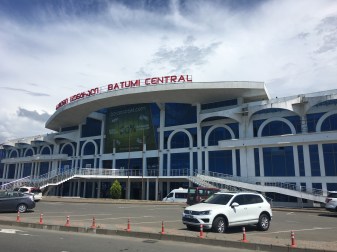
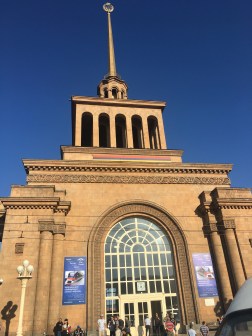 It was early morning and still cool so I decided to walk from the, admittedly, statuesque central station to the hostel I had booked at random before leaving Tbilisi but the walk didn’t change my initial opinion of the city despite the plenitude of park benches and drinking water fountains. Overall the impression was one of grey, concrete drabness. The hostel was small, cramped but cheery with two Filipina girls laughing and cooking breakfast in the tiny kitchen but only a small, top bunk was available and I decided to move on.
Untended vines, the thickness of my thigh, sprouted from broken pavements, climbing above fashionable shops on the ground floor, masking the ugly, squalid looking apartments two, three, four and five stories above while a dusty church topped a small bare hill opposite a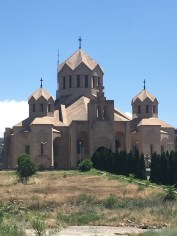 Carrefour supermarket. I was beginning to regret having made the sweaty overnight trip here until I turned a corner and ended up in the English Park, a shady,
 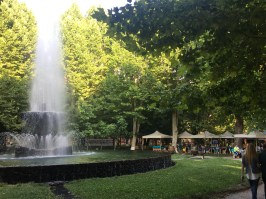 fountain filled park with a cafe and bar in its centre beside the big screen showing the latest matches from the 2018 World Cup. Just around the corner from my new hostel was an elegant and upmarket food hall
  leading to a broad, pedestrianized avenue with a stream of fountains running down the central area, culminating in Republic Square. Massive, monolithic buildings of naturally coloured tufa, a rock made of compacted volcanic ash, in various shades,
 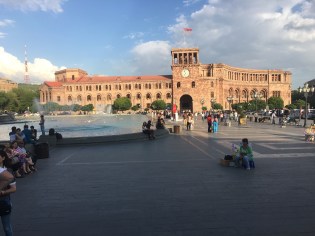 ranging from light pink pastels with a hint of orange formed a semi-circle around the Central Bank, and the National Art Gallery and Museum, almost completing one arc around the huge central fountain – musically choreographed and floodlit by night, as I was to discover later.
Fountains, parks, churches – Armenia was the first “European country” to become Christian in something like 330 A.D. – almost a century before St. Patrick arrived in pagan Ireland in 432A.D – and grapevines seemed to crowd the city, which I could look down on after climbing the endless steps known locally as ‘the Cascades’ to the multi-level 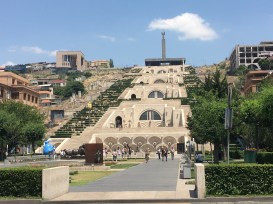
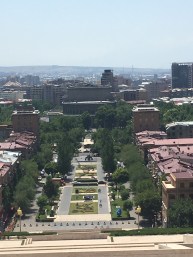 Cafesjian arts centre, named after the Armenian-American who funded the completion of the former Soviet era construction.
Cold beers – I loved the Name ‘Zadecky Goose’ – and lamb kebabs in the English park, watching the world cup matches at the convenient time of 4PM 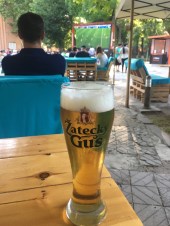 followed by classical concerts at the National Concert Hall with brandy chasers afterwards began to pall and it was time for a change of scenery.
 I have spent twenty-odd years living in Asia and during that time visited most of the ruined and fabled lost cities and temples – Pagan in Burma, Angkor Wat in Cambodia, Ayutthaya in Thailand and My Son in central Vietnam, so I decided to do something similar here in Armenia.
Garni is the only pre-Christian structure remaining in this devotedly Christian nation. Built by Tirdates I around 77A.D., with reparation payments of 50 million sesterces along with Roman craftsmen provided by Roman Emperor Nero, the classical Graeco-Roman style building may have been a tomb, thus explaining why it escaped destruction during Armenia’s militant Christian past. Possibly 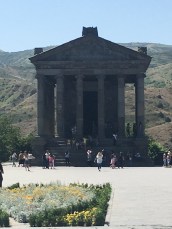
a temple dedicated to Mihr, the sun god in the Zoroastrian mythology, the massive colonnaded building, perched on the edge of sheer cliffs, would have been a perfect spot from which to hurl sacrifices! Huge steps led up the front  entrance, forcing me to scramble up, practically on my hands and knees, proper style for entering a pagan temple, I thought.
A twisting road lined with cherry and other fruit trees led to a spectacular monastic settlement at Geghard a few kilometres away. Established in the early 4th century by Gregory the Illuminator, on a former pagan sacred site, inside a cave with a freshwater spring, and surrounded by towering cliffs and tumultuous drops on every side,  the incredible monastery huddled in the rock face where ascetic monks must have eked out a precarious existence in caves in the cliffs reached only by ladders or ropes, ‘adding prayer to shivering prayer’* and exposed to the elements.
  Apparently, the old monastery had, along with the monks’ quarters, churches, shrines, a seminary, an academy of music and, of course, a manuscriptorium where, presumably Gregory hung out. And all this was all just as the Armenian alphabet was being invented! To add gloss to the whole place, relics included the original spear used by the centurion to pierce
  Christ on the Cross, brought here by St. Jude – known, inexplicably here as Thaddeus The spear pictured here was just the case for the relic now kept elsewhere in Armenia, – as well as a chunk of wood said to be from Noah’s Ark!
Lake Sevan, about 70 k outside Yerevan and at 2,000 metres, promised cooler weather from the city’s stifling, hot summer where daily temperatures seemed to always be north of 38°C and the idea of bathing my feet in a local lake rather than Armenia’s beer, wine and brandy appealed to me.  No-one could call Sevan a pretty town and on the advice of another passenger on the bus, I skirted the town completely and headed out towards the Sevanavank monastery, founded in 874 A.D., built on the southern shore of a small
 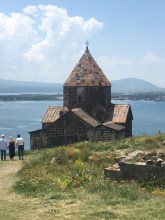 island, which, after the lake was drained during the Stalinist era, transformed into a peninsula at the north western shore of the lake.
The lakeside was more appealing with a smattering of fashionable hotels clustered around rusty shipping container-like ‘rooms’ offering cheaper rates and massage to gawking tourists, many of them from neighbouring Iran, judging by the head-scarved women wearing what looked like voluminous dressing gowns.
Determined to watch the World Cup games, which my hotel was not showing, I ended up with a taxi driver, willing and smiling to my demands for ‘fussball’ and beer, who obligingly drove me around from betting shop to betting shop inm Sevan town before throwing up his hands in despair and taking me to a micro brewery on the edge of town where the staff were either unwilling or unable to turn the channel to the impending Australian Vs. Peru game. The taxi-driver – grinning maniacally – seemed happy to wait on the opposite side of a two lane motor highway while I gulped darkish beer and gnawed on tough lamb / goat bones before sullenly returning to my lakeside hotel and back to Yerevan the following morning.
Another day to stock up on Very Superior (VS); Very Superior Old Pale (VSOP); and Extra Old (XO). brandy and then the clunky train back to Tbilisi.
* ‘adding prayer to shivering prayer’ is a line from the poem September 1913 by William Butler Yeats, Ireland’s first Bobel Prize winner for Literature.


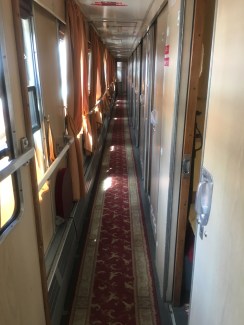 Strolling up and the down the narrow corridor outside my compartment – there was another twenty minutes before the train was due to leave – the only differences I could see between the carriages was mine had the top two bunks removed, leaving only the bottom two.
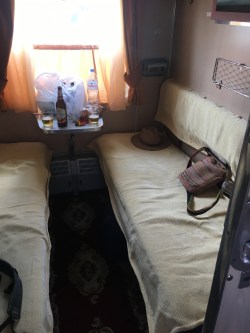 panting sounds, mopping rivulets of sweat running down my face and neck and pleaded for the air con to be turned on, the brutal blonde overseer of the first class compartment seemed not to notice the 37 degree heat and only reluctantly turned the a/c on low, only to turn it off every time the train crawled into another small, sun-baked station.
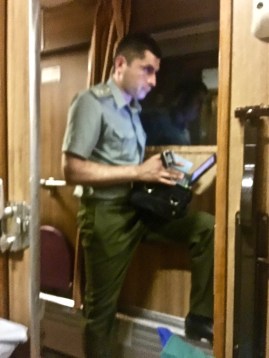 Surprisingly – and pleasingly – smartly dressed Armenian officials came down the corridor with laptop computer scanners and handed back my passport within a minute of collecting it.
 Arrival time rolled around and the train still trundled noisily over flat, dusty plains with no sign of an imminent city.
  Questions to Lana about the expected arrival time were dismissed with a brusque hand gesture and a shrug and it was a good four hours late before the train finally shuddered to a halt in Yerevan itself.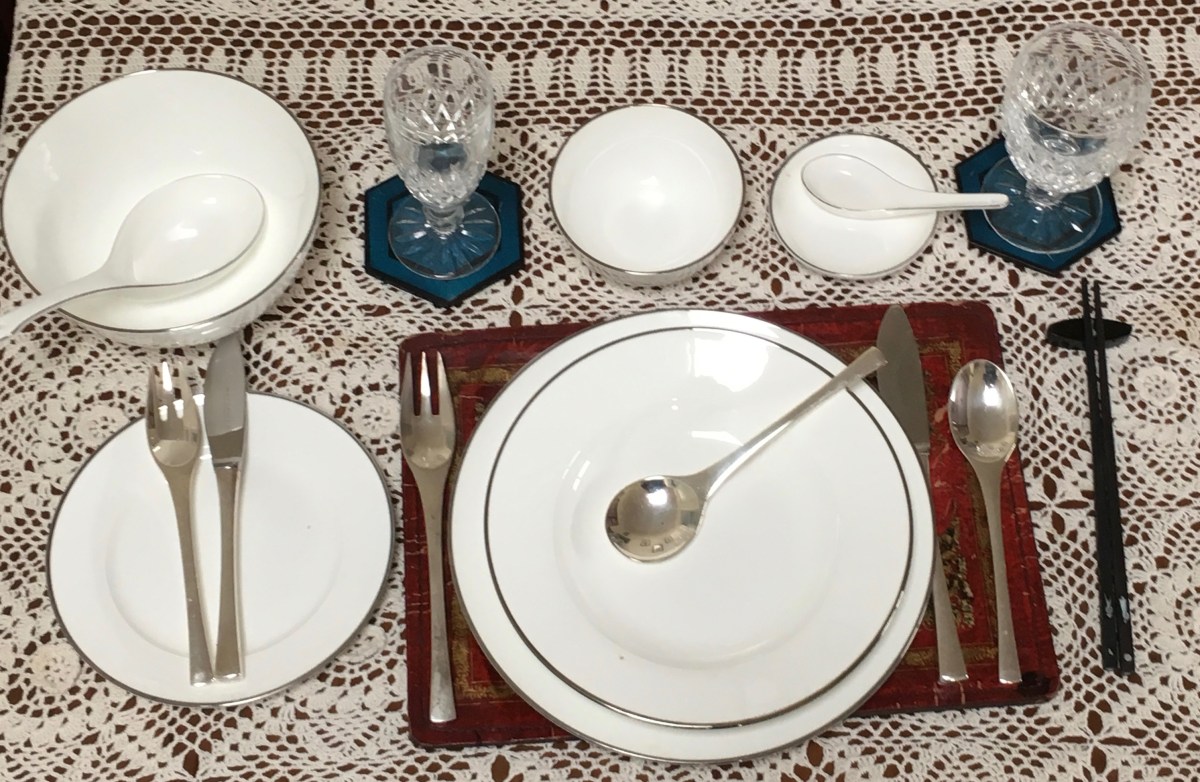
 I bought a cheap bottle of French brandy – bottled in France, VSOP and so on but still cheap as chips compared to the heavy hitters like Martell, or Remy Martin or Hennessey, but never mind, I’m just going to chuck it in with the livers.
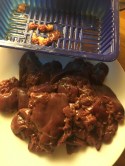 although when dealing with a handful of chicken livers, there’s not a lot to be said there. Not like a calf or a pig liver, which is a bit more of a substantial handful.
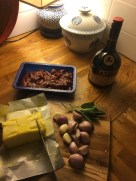 Anyway, next, chop the shallots and garlic finely. I used three large shallots which, when peeled, became about 8 or 9 cloves as well as three large cloves of garlic. In the end, I threw them all, along with half of the sage leaves into a food processor and whizzed them for less than thirty seconds.
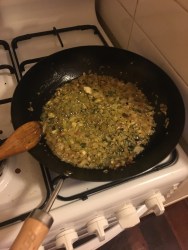 Shake the pan and give it a stir if you want and flip the livers over after two minutes or so. I added two full measures of the brandy then and let the liver
  simmer for a minute or two. I fished out a large one and cut it in two to check the interior pinkness.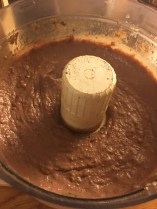

 The sieve became quite heavy and when I turned it over, all of the finely sieved paté was stuck to the underside of the sieve. I scraped it off with a palette knife and dumped into two ramekins I had ready. It looked gorgeous – a rich chocolaty colour and a smooth, silky finish.

 Red Branch Chronicles
You must be logged in to post a comment.