Cuba and Beyond

Part One

Fidel in Cuba died recently and I felt smugly pleased that I had made it to that island before he had passed away. Well done, I have to say, for standing up – alone (except for massive Russian help, I suppose, in the earlier days) – to the regional superpower and for sticking to his guns over the last three plus decades.

I remember being exhausted when I thought about how I arrived – the flight from Sydney to Dallas was 15 hours! The amazing thing was that I left Sydney at 1PM on Wednesday 12 August and arrived here in Dallas 15 minutes later on Wednesday 12 August. Still haven’t worked that out. However, on again to Mexico City where I’ll stay the night before leaving for Havana the next morning!

Stayed in a lovely hostel in the Centro Historico in Mexico City and caught my early morning flight to “La Habana” the next day. Arrived safely but a bit tired after nearly 26 hours actual flying time. Stayed in a very nice “casa particulare” which is a private home providing bed and breakfast.  The Cuban government under Raoul, Fidel’s brother, recently decided to allow private individuals to rent a room in their homes to tourists. Fascinated by the disrepair everywhere, I went out for a walk the first evening and got lost immediately – took me 4 hours to find the pension again.

fullsizeoutput_fb7Havana is amazing – Like going back in time – a jumble of narrow streets, all dug up and rough, crumbling mildewed buildings propped up with wooden beams and here and there a splash of bright paint covering up the ruins! If I thought the streets in Hanoi were confusing and the rough paths in Saigon were not for pedestrians, here in Havana everything is worse – the streets are a jumble of broken pavements and street signs are few and not very clear.  So far I have got lost every single time within 5 minutes of leaving my “casa” and I end up walking around in a maze of narrow streets, stopping whenever I can to gulp bottled water and find a shady cafe where I can sit, relax, read, study Spanish and do people watching.  All the men are stick thin, mostly, while the women have the biggest bums and boobs I have ever seen.  I hadn’t realised how black the people are – all shades really from shiny black African types to milky coffee colours. The only peopfullsizeoutput_fb6le who speak English are the touts who offer cigars, taxis and tours – “hello, welcome to Cuba, enjoy your holiday – where are you from? No, no, wait, listen to me, I don’t want your money for myself but if you can buy some oil or milk for my baby ….“. And then there is the music – every bar seems to have a traveling band who play for 30 minutes or so before passing the hat around! Where I had dinner last night – a grilled fish with rice and black beans – the band had a resident couple in a flamboyant costume who danced salsa for tips.  Everything is cheap but not too cheap in Havana and nothing is free of course – even sitting in a park will attract touts and sometimes it is easier to give a few coins than to constantly refuse.

I ended up staying 6 nights and then got a 4 hour bus ride to Viñales a rural town to the west of Habana where the main occupation seems to be sitting on a verandah in a rocking chair, drinking Ron! Very quiet and calm compared to Havana which was a bit too money hungry for my liking.  Here in the village everything seems to be a lot slower as was img_0623the Internet which was intermittent and chaotic.  Queued for more than an hour to buy a internet card valid for one hour and which must be used on the pavement outside the telephone office in order to use the connection there.  Weird system, or maybe no system at all. I really need to book a flight out of Cuba before it is too late because the music, the salsa dancing, the food, cocktails are all so lovely and laid back. Probably going to leave the home stay in Viñales tomorrow but the food is incredible – both the quantity and the quality – I’ve eaten nothing but seafood and last night my lobster was too big for me to finish! – and head off to a beach nearby and stay there for a few days – long enough to get laundry done! All the bars everywhere have a roster of bands playing great salsa music for about 3 or 4 songs before they pass the hat around and try to sell their cd.    The last night in Viñales, there was a ten-man band belting out the music and eight extraordinary dancers at the cultural centre where – of course both the band and the dancers expected – and were well worth – the minimal tips involved.

Left Vinales and took a bus down to the south coast to a town called Cienfuegos where the casa particulare, while pleasant enough, was miles out of town.  I didn’t really like the town despite its fantastic lovely buildings as it was stinking hot and there were not enough bars.  Decided to leave the next day and go to Trinidad and took a taxi to the bus station where I queued for the bus ticket and then queued again to get a seat number on the bus but when the bus finally arrived there were no seat numbers so I just sat down.  Cubans have to queue for everything here – God help them! In direct contrast to Cienfuegos, img_0632Trinidad was lively and colourful – narrow, cobbled streets, loads of bars, great music and fantastic restaurants.  Sitting on a rooftop terrace enjoying the first mojito of the day, listening to another band with a fat lady belting out the songs and swaying to the rhythm when the singer asked me to dance and tried to show me the steps, faster and faster, swaying all the time.  Of course I had to give her a dollar then.  Great fun, though, but God, the sweat pours out of me.

Left Trinidad worn out and hired a taxi for the 12k run to the coast – Playa Ancon, which looked lovely but the hotel was $125 a night – a bit rich for my blood – so back in the taxi, another $7 and down the road to a local fishing village where I found a lovely clean room in a private home where the host also offers breakfast and dinner.  This morning, before leaving Trinidad, I had breakfast in the  casa – a pot of strong black coffee, a pot of hot milk, a basket of toast, four small pancakes, a plate of sliced cheese and ham,  a small omelette, a HUGE jug of fresh mango juice, a plate of papaya, mango and pineapple and a litre of fresh yogurt – absolutely amazing.  Enough to last me for days – or until dinner tonight and I’ve already ordered fish.

Back in Havana and sitting on the balcony of my casa particulare and enjoying the afternoon breeze and listening to the noise of the street below me – groups of young kids kicking a punctured ball around and singing “ole, ole, ole” (probably the worst “music” I have heard since I arrived). Planning to take a ferry ride across the harbour to a fantastic, img_0572fairytale fort on the other side the next day.  Time for my evening cocktail as I try to chat in Spanish to the old man, Gomez and his wife, Miranda who are renting me the room, a/c, private bathroom, big bed and balcony plus a huge breakfast Trying to keep the spending down but had to splash out at the loo today in a hotel! No free lunches here – everything has to be paid for. I’ve enjoyed Cuba but now, it’s getting on time for me to move on and I plan to fly to Quito, which is the second highest capital city in the world, in Ecuador by the end of the month.  Should be cool there, I’d imagine! I drip with sweat the whole time here and my sandals stink despite me washing and scrubbing them every night.

Cuba is really a step back in time. Queues are paramount, even to enter the bank, only one person allowed in at a time, or to buy a bus ticket, or the exchange booth but as yet I have not seen an ordinary shop as we know it. Plenty of souvenirs on sale as well as exquisite lace and embroidered everything but I haven’t bought anything yet, except for food and drinks.  Pathetic in loads of ways, queues in the morning for bread and oil, no internet to speak of, battered and broken down old Russian Ladas and ancient Chevies and Caddies, mildewed and crumbling buildings, incredibly fat ladies squeezed into tight Lycra, but God, the music, the rum, the ambience, the sheer decrepitness of it all somehow combines to provide an out of world feeling.  In the bars at night, there was music in the air and revolution in the air. A rum mojito – although I tended to prefer daiquiris – was an experience as no barman worth his salt would ever dream of using a measure. They just up-ended the bottle leaving barely a fraction for a splash of fizzy water. It became my undoing as they would offen enquire if the drink was “fuerte” enough and of course, being who I am, I would shake my head and pass the glass over where they would freshen it for me. Not much else to say about Cuba mainly because I don’t remember my alcoholic nights which often began shortly after noon for the above reasons but overall, I’d have to say a good time. Nevertheless, glad to leave after nearly 3 weeks there  and flying onto Quito, via Panama, in Ecuador. From there, I don’t know exactly what my plans are but I just find the heat and the humidity here in Cuba a bit draining.  Here’s hoping the cooler air further south will revive me as Quito is something like 2,500 metres above sea level. I doubt I will complain about the heat there. And, there should be regular internet access there. Had enough of poor old Cuba.


Chugging Along & On the Road

Continuing on from – Off the Rails in Hong Kong

Part 4

Chugging Along

OLYMPUS DIGITAL CAMERA

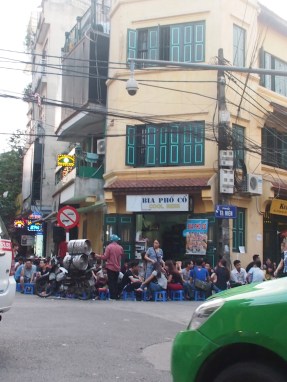
Back to cultured and reserved – in comparison to brash and reckless Saigon – Hanoi and time to start looking for the next train on the journey – the Hanoi to Da Nang leg which was going to be the longest leg so far at about 14 hours. My train south wasn’t for another few hours. Ignoring the blandishments of The Irish Wolfhound Pub, I sat on a tiny plastic stool on a street corner at some busy intersection in the old town and drank bia hoi, or so called fresh or draught beer which, for some reason was incredibly cheaper than drinking beer in a bar. Each generous glass of bia hoi cost 5,000 dong (about US 25 cents) as opposed to the more usual 25,000 or 30,000 dong in bars.

I had booked a sleeper to Da Nang yet every backpacker I talked to mentioned that they were going to Hue (Huey, as one girl pronounced it). Hmm, thinks I, have I made a mistake here, I wonder. No-one seemed to be that interested in Da Nang! Sure enough, at Hue at about 10 the following morning, half the train emptied out as I strolled down the swaying corridor. Nevertheless, the best part of the ride was between Hue and Danang as we seemed to crawl along a series of precipitous cliffs looking down on deserted rocky beaches on one side while on the other side, rice paddies with muddy water buffaloes standing passive sentinel, stretched away to misty mountains and outcroppings and I congratulated myself on that.

OLYMPUS DIGITAL CAMERA

Arriving in Da Nang at about 2:30 Pm – the train really went slowly along the cliff face – I was met with the usual gaggle of taxi and motorbike touts but shouldering my backpack, I marched through them and started to wander. Whenever I came to a junction I turned right, hoping that something appealing would appear but in sharp contrast to Hanoi – and more so to Saigon, the streets seemed oddly empty, both of people and traffic. Why, it was perfectly feasible to cross junctions with barely a look to the left, right, behind, in front, left and right again before crossing.   Beginning to get hungry – the last time I had eaten was a good 20 hours previously – I was getting desperate for a coffee and something – anything – to eat when a large motorbike sidled up beside me and a guy politely asked if he could help me with directions.

Turned out he was an “Easy Rider” guy, one of a growing band of semi-professional drivers and guides who specialize in taking travellers off the beaten path on do-it-yourself style tours. I had used an Easy Rider before in Dalat and had a great day out with them. You give them the general direction you might like to follow and they take you there by back roads, over rivers and sand dunes, through the mountains and down the valleys in a way that scorns the tour bus.

On the Road

Just take me someplace for a coffee and then I’ll decide, I told Binh. It turned out that we had been born in the same month and year although he claimed to be a year older as an extra year had been added on to his birth year during the recent Tet. (Most Vietnamese do not celebrate their actual birthdate – birthdays are a western phenomena. Instead, every Vietnamese starts off at the age of one and then gets an extra year tacked on every Lunar New Year, hence Binh’s seniority.

Anyway, the upshot of the whole deal was that Binh convinced me to saddle up and leave Da Nang immediately and head on up the road to Hoi An about 45k away and finishing the coffee, I put on a real motorbike helmet – not one of the more usual, plastic coated tin hats most people seem to favour – swung my leg, with some difficulty, over the back support and settled on to another Easy Rider drive.

Whipping down the coast highway, Da Nang seemed to be experiencing a construction book in luxury holiday and golf resorts. The beach side of the road was lined with immense gates and walls with immaculate landscaping but both the accommodation and the beach were out of sight. Skirting by the ruins of the largest US air base during the American War, the other side of the road was taken up by lush green fairways for the several golf courses that looked squeaky new and manicured.OLYMPUS DIGITAL CAMERAOLYMPUS DIGITAL CAMERA

And then we were into Hoi An and Binh obligingly picked a rather fancy looking hotel right on the river, a few hundred metres from the iconic Japanese bridge which has become a hallmark for this World Heritage town. Luckily, the hotel while looking quite fancy – it even had a swimming pool – was not exorbitant and well within my budget.OLYMPUS DIGITAL CAMERA

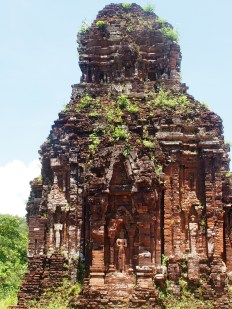
Before he gave me directions to where I could get a cold beer, Binh persuaded me to sign up for a full day motorbike trip around the surrounding countryside, promising an array of sights culminating in Vietnam’s own “Angkor Wat”, the ruined Champa kingdom at My Son.  Ruined was haerdly the word for it.  Devastated time and war blasdted would be more accurte.4  US marines had “saved” the site from the Vietcong back in the day by pulverising the remaining buildings and temples, apparently.

Spumante and Cailiflower

The first time I had been to Italy was in the early seventies when it took me six days and nights to hitchhike down from Amsterdam to Rome to meet my sister who turned out to have left five days before I eventually arrived. At that time, I remember turning down the offer of a lift to a place called Firenze because I wanted to go to a place called Florence. But that was a long time ago and then I had arrived in Milan, penniless and without any Italian whatsoever, to teach English at the British Council.

The Council, in a rather lordly way, having been informed of my arrival, had booked me into a rather expensive pensione – the Albergo nell’ Galleria in one of the smarter areas of the city, near the Piazza Duomo, the heart of urbane Milan. My first thought on seeing the rather exquisite setting, with its canopied four-poster bed, thick, musty carpet, the walls covered in a dark, flocked wallpaper and its views of the massive Cathedral out of the balconied windows was “Ohmigod, how am I going to be able to pay for all of this?”

That first afternoon, sprawled on the bed, counting the few lira I had, I felt a distinct uneasiness. The day was dark and drear and the majesty of the Duomo dwarfed my spirits. I had yet to begin work and already the prospect of being in debt was weighing heavily upon me. The Allbergo was old and fusty, even the furniture seemed antique, dark, heavy wood, ornately carved, while the coat-rack on the wall seemed to be unnecessarily convoluted, and was not even placed on the wall properly, as my coat seemed to be hanging crookedly. In fact, as I glared at it with irritation, the coat seemed to be swaying as if it were a pendulum, while a dull, far away rumbling emanated, it seemed, from the bowels of the old hotel.

It was only later the next day that I learned that I had survived my first earthquake, when a minor quake had struck the northern Po valley. Only one casualty was reported, a 79 year old man had died when he had tried to steady his ancient Grundig TV set which had nevertheless toppled over, killing him instantly.

However, that was more than enough excuse for me to withdraw gracefully from the Albergo, and go looking for cheaper accommodation elsewhere.

I found it in the Via Rovoletto, a narrow, curving alley, in a warren of similar streets, dotted with cheap-looking greasy-spoon type “restorantes” and even seedier looking hotels, outside of which blowsy, middle-aged women, in tight miniskirts huddled in thick jackets against the cold, seemed to be loitering unnecessarily. Hotel Rovoletto had glass doors with its name stamped in faded gold lettering, a thin, wine red carpet in the lobby, two plastic covered armchairs on either side of a tall urn-like ceramic vase holding artificial flowers and a reception desk.

The elderly middle-aged man behind the desk seemed not to comprehend that I actually wanted to book a room and kept looking around him with an air of mystified bewilderment. Between his lack of English and my lack of Italian, what should have been quite a simple transaction between a guest and a hotel receptionist turned into a protracted pantomime with me placing my clasped hands on the side of my face, closing my eyes, snoring loudly, then gesturing at my chest and finally airily waving my hand above my head to indicate the, no doubt, numerous and vacant rooms the hotel undoubtedly had, while he shrugged his fat shoulders, brushed the back of his fingers under his unshaven chin, shook his head, rolled his eyes and seemed to do everything possible to deter me.

Finally in exasperation, I pointed at the keys hanging up on the wall behind him and, proffering my passport in an attempt to distract him, I tried to reach over and help myself to one. More, to me, inane explanations which finally subsided into a marked grudging acceptance when I flourished my rapidly thinning roll of Lire. After signing various forms and having him tediously check my passport details, I was eventually led up a flight of narrow steps, barely covered with a well-worn red carpet, unraveling at the edges. By the third floor, all pretense at class had vanished, as had the carpet, and the long, bare corridor was eerily lit by a naked light globe hanging from a frayed wire.

The room was dark and dowdy. The bed rickety, with a noticeable dip in the mattress so that no matter which side of the bed I lay on, within seconds I had rolled into the trough in the middle, and the thin gray sheets had been laundered so often that they were almost transparent except where they had been patched and repatched over the years. Clearly, Hotel Rovoletto would not be finding a place in any of the more respectable accommodation guides to Italy’s fashion capital as I was to find out more explicitly later.

That night, returning from a fantastically robust, and ultra cheap meal of pasta and beans at an underground cellar of a restaurant called Zia Carlotta, I was accosted by several stout women, lingering under the dim street lighting of Via Rovoletto. Bundled in thick coats against the winter dampness of Milan, the women made coarse gestures and cackled amongst themselves as I walked by, still naively uncomprehending the type of area I had chosen to stay in.

As I queued at the reception desk for my key, a stream of “ballerini della notte”as I later heard them rather charitably described, ascended and descended the shabby stairs with occasional shame-faced men in tow. The reluctance and bewilderment on the part of the desk clerk, the mean strip of carpet running only to the second floor, the thin, well-used sheets, the loitering women, the hoarse cackling at my expense all seemed clear now.

I had probably been living in Milan for well over a year, but no longer at the Hotel Rovoletto which I had left as soon as I could afford to, when my brother casually mentioned in a telephone conversation that one of the advantages of living there must be the ability to go into a bar and have a glass of sparkling wine at any time. I agreed that it was and the conversation turned to other things.

As soon as was decently possible I rang off and rushed to the nearest bar and asked for a glass of sparkling wine (Spumante). It had simply never occurred to me before. I was aghast at the time I had wasted and from that point on, I made a beast of myself. I particularly liked it when I’d ask for a glass and the barman would fish out these bottles from cooled, sunken tubes behind the stainless steel bar only to find them empty and would instantly oblige by opening a fresh bottle, just for me.

I enjoyed the clear, fruity taste of the Spumante so much that I determined to make a special trip to Asti just to pay homage to the most famous of all the spumantes, the Asti Spumante.

And it was in Asti that I believe I first fell in love with food per se.

The restaurant wasn’t fancy, but it was lunchtime and I was hungry. The town was empty – it was autumn and no tourists were about and what locals there were, were not eating at this particular restaurant. It was plain and homely with traditional red checked tablecloths, while the proprietors, a massively overweight, elderly senora dressed in faded black clothes and heavy brown nylon stockings busied herself behind a high counter, ignoring me as I attempted to understand the hand-written menu. Not quite sure what I was ordering, with the exception of the Spumante, I pointed at various items and attempted to engage her in conversation.

“Questo, e buono?” (This, is good?) but all I received in return was a brusque nod so that all I knew was that I was ordering some kind of vegetable dish. I ended up with a surprisingly simple dish but I had never eaten anything as delicious as those deep-fried cauliflower. Such was my naivety at the time that I thought, by praising the dish and the senora in my faulty Italian and ordering more, she would be flattered and heap more on my plate in true home style hospitality. More was heaped on my plate certainly, but the shrewdness of the country folk ran true and more was heaped on my eventual bill also.

Culture Shock in the USA

The most exciting thing about overseas travel is the novelty and oddness you can come across without any warning whatsoever. This was especially true for me in, of all places, America where the utter strangeness of some things, in what I somewhat foolishly thought should be a familiar situation, completely banjaxed me. Coming from Ireland and knowing that St. Brendan and other intrepid Irishmen had colonized America long before Erik the Red and the Vikings and nearly a thousand years before that upstart Columbus, I automatically assumed that everything would be familiar, only more so, as it were, and that I would be above and beyond culture shock.

However, to be fair, I suppose it worked both ways. I’m pretty sure I shocked a fair few people there as well! For most of the preceding year I had been a vegetarian for no particular reason other than it seemed like a good idea at the time. Anyhow, on one of my first nights in New York City, wandering along 5th Avenue, I stopped here and there in bars, many of which were adorned with shamrocks and other Irish insignia. I was treated like visiting royalty on account of my “fresh” Irish accent but I began to develop a general awareness that I was in dire need of sustenance, other than the liquid kind, if I were to continue enjoying New York hospitality. Lurching into the nearest fast food restaurant, I sat boldly at the counter and squinted short-sightedly at the menu on the wall.

“Wha’ll it be, honey?” a large black lady behind the counter asked, already serving me a tall glass of iced water without me asking for it. “A cheese bugger with reg’lar fries”, I slurred, rather proud of my ability to have picked up appropriate Americanisms so quickly. To my horror, I received a massive slab of minced meat fashioned into a crude rissole, sandwiched in a colossal bun, adorned with fried onion rings and slices of impossibly large gherkins while several kilos of french fries vied for room on a platter the size of a coffee table.

“Sorry,” I mumbled, embarrassed at the unaccustomed task of sending food back, “I ordered a cheese burger an’ this,” I gestured wildly at the plate in front of me, upsetting the glass of water, “has meat in it!” Credit where credit is due, despite the large lady’s obvious amazement, she did attempt to reason with me by pointing out that a cheeseburger always had two main components – cheese and a burger. Looking back now, I cringe at my naievety.

Best to leave New York, I thought, the following morning so I set out to discover, like so many before me, the “real” America. I was looking for diners, steamed up windows, long shining, stainless steel counter tops, a juke box in the corner, pony-tailed girls in bobby socks (whatever they were) jitter-bugging away, cheerful, wise-cracking, gum-chewing counter hands, serving Mom’s apple pie, with coffee on the side and ice cream soda or floats or spiders or whatever they were called in that particular neck of the woods. I had already had a brush with the variety of names for fillings on a bread base – open-faced Rubens, hoagies, heroes, submarines and they are only the ones I can remember now. The relatively simple task of ordering a plain, honest-to-God sandwich involved such a plethora of choices – white, whole wheat, country wheat or rye breads, rolls, bagels, ciabattas and then butter, mayonnaise or margarine – that I began to suspect that they were deliberately trying to bamboozle me.

Driving out past the lunar landscapes of New Jersey and Allentown and into the Dutch Apple State, the scenery changed to Bonanza style country and so did the people. Gone was the elegance of 5th Ave. The further west we went, the further my illusions of familiarity with the culture receded. By the time I hit Kentucky, wiry, muscular types in greasy, blue jean overalls, with heavy working boots became the norm. Pickup trucks, a rifle or shotgun prominently displayed in the back window, constantly passed me, both ways. Just as strange was stopping at a gas station to fill up and seeing ice-cold six-packs of beer openly on sale. Eager to take advantage, I, of course, bought a six-pack of Ballantyne Ale, (a different rebus inside each bottle cap!).

Stranger still was the fact that no one seemed to understand a word I ever said. “Whyat’s thad yew say-id, byoh,” they’d drawl. Perplexed looks would invariably greet any request I might make, while they’d push back stained baseball caps and scratch sun-tanned foreheads. Repeated attempts to make myself clear failed to clear the hurdle of their incomprehension at my accent, so much so that I began to revise my earlier belief that Ireland had colonized America. Not this part, obviously.

The bluegrass (which was just ordinary green) area around Louisville (pronounced Lou’Vil) with its rolling countryside, winding country lanes and fertile fields provided everything a red-blooded male could possibly want – guns, pickup trucks, baseball caps, horse racing, beer available practically at every red light and red meat in every variety, shape or form, as I was to learn. So, determined to try something a real man would eat, I pulled into a diner on the outskirts of some small burg. Two fat ladies, with soiled tea towels casually tossed over the shoulders of their too-tight uniforms, behind the counter burst into laughter when I asked what they would recommend

“Why, honey, everythin’ we gots is just fine and personally recommended.” Gales of laughter followed this, along with much rolling of the eyes and patting fat stomachs and haunches. “How y’all want yore eggs?”

Oh God, I thought to myself, here we go again, over easy, sunny side up, over medium, scrambled, poached, what other bloody variations are they going to spring on me next?

“Ok, ladies, I think I’ll have two eggs, sunny side up and …ehhh, what’s this turkey fries, what does that mean?” I said, pointing to an item on the plastic covered, hand written menu.

As soon as I had said it, a strange silence fell and the two ladies exchanged quick, flustered glances with each other. “Way-hall, y’all know honey, fries are like, y’all know, Rocky Mountain Oysters or …”

“Ranch fries,” the other lady butted in. “All the folks round here shore like ‘em.”

“Yes, but what are they, exactly? What does it mean?” I persisted. “I just don’t know what they are. Are they the same as ..?” I hesitated and glanced down at the menu again. “Are they the same as lamb fries?”

“Yessiree, they are and they aren’t. That is to say, the lamb fries are a bit bigger’n the turkey fries but Ah do believe they are ev’ry bit as tasty and delicious, I do assure y’all”

Totally confused at this stage, I looked around only to meet looks of incomprehension on the other punters’ faces, mingled, perhaps, with warning looks.

But too late, I was already ploughing on. “I’m sure they are as tasty and delicious as you say, but I’d just like to know what they are, I mean, I’ve never heard of them and I just …”, my voice tailed off as the two ladies, now visibly annoyed with me, their once smiling faces now set and stern, as if in suet, backed away from the booth table where I was sitting, taking the grubby menu with them.”Harold!” One of them hollered, “There’s a jinelmun out here askin’ a mighty load o’ questions of us ladies and we think it might be better if y’all came out here right now.”

The swing door behind the counter into the kitchen swung open with a crash and a short, stocky man, the ball of his belly held tight by a dirty apron, appeared. His crew-cut head glistened with sweat while the redness of his face highlighted a white crust on the corner of his mouth. For some reason, he was holding a baseball bat across his chest in the port position I had seem marines holding their rifles just recently at the Fort Knox Military Reservation. It was only when he sauntered across to my table snapping the bat into the palm of his hand demanding to know what the problem was, that I began to realize that there might actually be a problem after all.

“No problem, actually,” I began. It’s just that these ladies mentioned turkey fries to me and I’m not quite sure what they are, that’s all. They said something about oysters and the thing is, I’m just not too sure … I tapered off, as he continued to give me a hard stare.   “Y’all not from around here, is that it, son?” Perhaps it was my accent or maybe it finally dawned on him that I had no idea what turkey or lamb fries were. After all, it wasn’t that long ago when I didn’t know what a cheeseburger was, for that matter. He wasn’t to know that of course but his tone changed completely as he slapped a massive, meaty hand on my shoulder and levered me to my feet. “C’mon with me, son, Ah guess, Ah’ll jist have to show y’all what we folk mean by fries. Y’all sure now y’all nivir hear tell of Montana Tendergroin or Mountain Oysters?”

Shaking my head, I was led to a dented chest freezer, which Harold jerked open violently before he began rummaging among the cardboard boxes and plastic sacks. Finally, he pulled out a squashed box of frozen orbs, with a faint tracing of blue and red lines on and around them. Each knob was about the size of a baby’s fist and a horrible suspicion began to dawn on me. But turkey ones? my mind shouted, surely they can’t be …

“Downhere, y’all see, folks round here like to eat these – I b’lieve in Yerp they call ‘em sweetbread and Ah’ll tell y’all they shore are sweet, bud Ah doan’ know where they gets the bread from. Turkey fries, now are a bit different because we got to kill ourselves a fine burd to get our hands on them fries – why, they’re well tucked up behind the kidneys. Now, which ones y’all want to try first? Ah kin recommend the …hey, where in tarnation y’all going now?”

Thank God I still had a few cold bottles of Ballantyne Ale in the cooler in the back of the car which helped to wash away the very idea of eating turkey or lamb balls.

The Gift of Rain

I’ve just – sadly – finished a novel and, you know, sometimes within the first page that what you are going to read will be exceptional. It might be the evocation of a familiar setting, a specific time or place, the sharp delineation of a character, the nostalgia of a mood or scene or the beauty of the imagery clarifying a picture or a dozen other details but you know you have found one of those rare novels that hooks you immediately. In my case it was the imagery in the following sentence “” I could almost hear the chimes themselves and see the dust motes in the ray of sunshine filtering through wooden shutters into darkened, silent rooms.

So it was with A Gift of Rain by Tan Twan Eng, a taut, gripping story and a deep look into the darker sides of loyalty, honour and family and what those bonds involve, when placed under intense and conflicting pressures.

51vjpzwval-_ac_us160_Set in Penang, a former British bastion akin to Singapore, Hong Kong and Rangoon, several years before and during the Japanese invasion of Malaya and told by the elderly Phillip Khoo-Hutton to distract a surprise guest from her physical pain. The scion of a rich British merchant and a powerful Chinese family, Philip never felt he fully belonged to either culture and as tries to explain his relationship with the figure that has dominated his life and deeply impacted too on the life of his visitor he finds he may seek absolution from his guest in exchange for the honesty of his relationship with his mentor.
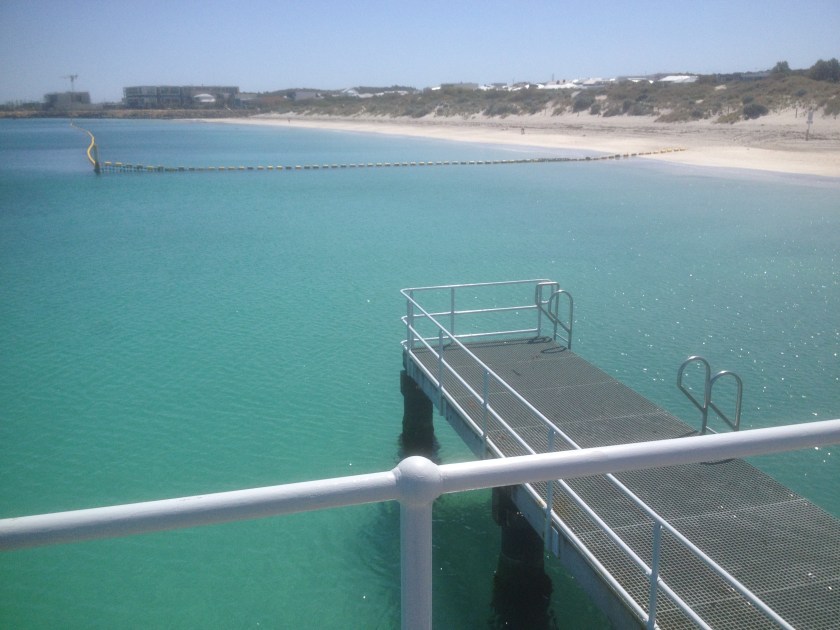
Images and similes are used beautifully to capture a precise moment in time as in “The sea sighed each time a wave collapsed on the shore line like a long-distance runner at the finishing line….. the waves roll to the shore with the detachment of a monk unfurling a scroll.”

Faced with differing cultures and ideas, Philip is gradually made aware of the importance of ancestry and loyalty to family but it is with his mysterious mentor that Philip experiences a rare and fleeting moment of intense lucidity.

“He had betrayed my innocence but at the same time had replaced it with knowledge and strength and love”

But that had never been enough to quieten the internal conflict his betrayal of all sides, the Japanese and the inhabitants of Penang, his homeland, had caused. Stung by his father’s accusations, Philip convinces himself that he is acting from a higher principle in line with his new understanding of family and ancestry and his duty to protect them at all costs.

Nevertheless, his suffering and pain in this confessional remembering of the paths he followed, remain and he endures now in the vain hope that he will re-experience the joy he once felt in those tumultuous times.

A fantastic read.


A Dip of the toe!

cropped-p8170324.jpg
CURVES


l  know I haven’t written much recently  on Curves – sounds like I have been stagnating – but I’ve really been doing loads of things and been just too busy to blog about them.

Anyway, I dusted off the bicycle – which hadn’t been used for a while – and headed off to the beach. Not to swim, unfortunately – it’s still freezing here, something like the coldest Spring in eleventeen years or something. For the first time ever, I had to get off and push the bike up the last bit of a small hill but  I am digressing – the point is …this is my new learning curve – right now is the moment I dip my toe (gingerly) into the … – struggles to maintain the metaphor here – … morass of cyber mobile blogging. This, then, is my first ever post to my blog – or anyone else’s, for that matter – from a mobile phone, despite the fact that I am sitting in front of a perfectly good computer! I know, it’s amazing that I should vaunt the minor ability to use a modern phone, a skill that seems almost innate to most people nowadays. Oh btw, here’s a photo of the beach.img_0193

Daily Life

With apologies to John Lennon, “Imagine all the people Living for today…” a life without books, mail, radio, TV, video, streaming, and no regular 9 to 5 job. Hard to conceive of, isn’t it? So, what did people do with their time during the Developed Iron Age (starting from about 400 – 1 BCE) in Celtic Ireland? How did they spend their free time?

The short answer is work. Everyone worked. There were no free lunches as it were. Both men and women worked in the fields, clearing the land, Men did the heavy plowing, made easier with new iron tools while the women weeded and sowed crops of wheat, barley, rye, peas and oats   Planting was done by hand in early spring, in tune with the feast of Imbolc celebrating fertility and the beginning of spring while the beginning of the harvest season was in late summer or early autumn. The harvest festival Lughnasa was held on or about halfway between the summer solstice and autumn equinox and would signal the turn of the seasons.

The women combed the sheep, cleaning the wool, dying and sorting it before spinning it into thread on a spindle. The threads were then woven on an upright loom. Heavy stones kept the vertical threads – the warp – straight while the horizontal thread – the weft – was passed in between.

Crops had to be ground down in hand powered querns (mill stones) for flour or made into porridge and used for beer /ale. The earliest querns consisted of a hollowed out stone onto which the grain was placed. A second, smaller and rounder, stone was place on top and rubbed back and forth to grind the grain, labouriously and slowly. A later Celtic invention made use of two stones, one convex and the other concave which were fitted together. Grain was poured in through a hole in the top stone, to which a handle was added so that the top stone could be “stirred” around, grinding the grain underneath into a rough flour.

Milk was an important part of the diet and used extensively in porridge, to which honey and herbs were often added.  Cooking was done, for the most part, over open fires either on a spit or in a bronze or iron cauldron. Nearly 5000 troughs, known as Fulachta Fíadh, have been discovered throughout Ireland and it is assumed that they were used as a communal type of kitchen as the stone troughs could hold water heated by hot stones in which food could be cooked. However they may well have served other purposes – brewing, tanning, rendering down fat and so on – but whatever purpose they had would seem to indicate a social purpose outside of the individual domestic home.

Sick animals needed to be cared for, while milking, collecting eggs, repairing thatch, fetching water and herbs were all daily and regular activities.  Cattle were highly prized, being the main source of wealth but pigs, goats, cows, ducks and geese were all essential to survival and meagre comfort while eggs were an essential part of protein and goose fat was used to soften and waterproof leather and goose feathers were used for bedding and cushions. (In Raiding Cooley, one of the characters was so excited that he bounced up and down, bursting the goose feather cushion he was sitting on!)

Dogs were used much as today, as both companions and guards against neighbourhood raiding, and fierce wild animals – the boar revered for its ferocity, and wolves while the superb Irish wolfhound would accompany warriors into battle.

No time was wasted in reading and writing for several reasons but mostly because there was no written language and the Druids believed holy knowledge was too important to be written down although Greek and Latin were sometimes used.

Ogham, often referred to as The Tree Alphabet, was an ancient British and Irish alphabet, not a language, dating from about 300 C.E. consisting of twenty (later amended to 25) characters grouped into sets of 5 and was made up of strokes or notches diagonally across, or on either side of, a vertical line, this often being the edge of a standing stone. Possibly the script is much older and might have been based on a type of sign language used by the druids using five fingers. More than likely based on the Latin alphabet,img_0324_edited but using straight lines rather than letters, the message is read from the bottom up. A letter for /p/ is conspicuously absent, since the phoneme was lost in Proto-Celtic, and the gap was not filled in Q-Celtic, and no sign was needed before loanwords from Latin containing /p/ appeared in Irish (e.g., Patrick).

The Ogham alphabet originally consisted of twenty distinct characters arranged in four series named after its first character “the B Group – BLFSN”, “the H Group HDTCQ,” the M Group MGNGZR”, and “the A Group – AOUEI”). Five additional letters were later introduced, the so-called forfeda but for convenience here I have reproduced the letters in Alphabetical order.ogham

Used mostly for names of individuals, they might well have been used to mark burial spots or act as memorials or perhaps they property borders.

Back on Track (part 3)

Continuing on from – Off the Rails in Hong Kong

And then, miraculously, order prevailed. Smart uniformed guards stood attentively beside each train carriage and, as it turned out, mine was the first carriage directly opposite where I wase spat out.

Compartment No. 3 was easy to find as was my bottom berths number 5  but unfortunately my berth was already occupied by an outstretched man defiantly smoking despite the no smoking sign above his head. Reluctant at first to go – he was already tucking into his styrofoamed packaged dinner with his bag stowed under my bunk – and it was only with some urging on my part – brandishing ticket under his nose, jabbing my finger at the numbered berth, shrugging disconsolatedly (but sternly) and that sort of nonsense that he shuffled his bare feet into his grubby sandals and buggered off, muttering audibly, no doubt about round-eyed foreign devils.

Punctually, the train jerked off at 6:30 and it was time for another few nips from the diminishing bottle of Stolly peach. Disappointingly, the restaurant car appear to be closed to passengers as once again the train official were occupying all tables but I managed to persuade them of my thirst and a 5 yuan can of warm Pabst Blue Ribbon beer was produced for me!

About four hours later the train lurched to a stop at the Chinese Border. Passports were collected and checked for exit forms and then everyone with their luggage had to get off the train. Luggage was – for the fourth time? – scanned while us passengers huddled sleepily together. And then pick up the bags and back on the train.

Passports were handed back just as the train lumbered past the final Chinese border checkpoint and I was officially back in Vietnam. Less than an hour later, the Vietnamese Border post where once again all bags had to be put through the scanner (again with nobody looking at the results). Passports were handed in to a tired looking, Immigration officer seated behind a plain table in the doorway of a small room.

Waiting for my name to be called I was pleasantly surprised to a) recognize my name (Mista Tee Ven) and b) retrieve my passport so quickly. However, I had to wait until all the passengers had received their passports before I could get back on the train and sleep. While waiting, I shared some of my dwindling vodka with two guys from Argentine and skillfully blended my Spanish and Italian remnants of language to amuse and baffle everyone.

Finally getting back on the train, I somehow caught my watch strap on the door and just managed to catch my watch as it slipped off my wrist.   Least of my concerns at the time and it seemed all too soon when the lights in the compartment came on and the conductor banged the door to announce arrival in Hanoi – only this wasn’t Hanoi main station. Instead this was a fairly small station north west of Hanoi called Gia Lam.

Apparently the rail gauge differs between Vietnam and China so the only common line they share is the spot between the border and Gia Lam. After that, Vietnamese trains need a different track width.

Arriving in predawn darkness, we stumbled off the train to be greeted by a line of the smallest taxis I have ever seen. Most of them looked to be no bigger than a Mini or the old Fiat 500. No choice here, really so I attempted to bargain the fare down a modicum and then squeezed into the back seat and off we were to an unknown street that I had picked from the map.

Sometimes, I suppose, it is better to book in advance and have a hotel ready for that awkward arrival time of 5:30 AM especially when the street you end up on remains firmly shuttered and the heavy rain begins.

No point being fussy here, thinks I, and I dashed around the corner, ducking under awnings and around parked motorbikes and barrows to the only hotel I could see which had a light on.

The Hanoi Orchid was just fine with a long, corridor like room but who cared about the shape when all I needed was a decent sleep.

Hanoi was radically different from Saigon, I noticed immediately when hunger finally drove me out later that morning.

OLYMPUS DIGITAL CAMERA

Much less busy with regard to motorbikes, and the pavements were almost uncluttered, while ancient trees seemed to shroud so many streets. Petals from purple jacaranda and red hibiscus littered the promenade around the Lake of the Recovered Sword while the twisting streets of the old town changed their names bewilderingly every few metres.

And then there was Halong Bay

OLYMPUS DIGITAL CAMERA

and the lure of spending a night on board a cruise ship. Halong Bay was declared a world heritage sight by UNESCO in and is a bizarre area of jagged limestone and karst outcroppings, some honeycombed with vast caves, rearing up from a bay of tranquil luminous water. No matter what the weather – clear and sunny or shrouded in mist and rain, Halong Bay is reputed to still cast its aura of beauty, peace and mystery over all who see it.

Regression – not Progression

Before I went off to South America in August 2015, I cut my hair. I have been back just over a year now and I haven’t cut it since! It is almost exhilarating – I haven’t had long hair since I was a teenager – and it was never that long to begin with. I remember once, when it was at its longest, I could cross my arms over my chest and, reaching up with my left hand, grasp a thick hank of hair and pull it under my chin to where my right hand would have grabbed the left hank and the two ends would meet.

That was back in the early seventies and I’ve never had particularly long hair since and nor have I wanted to. Now however?

I enjoy it, much, perhaps as a shaven headed man must feel running his hands over his smooth pate whereas I run my hands through my hair, pushing an errant lock out of my eyes.

So, here’s a photo of me with long hair from my bus pass back in the early seventies. Notice the segmented wheel around CIE, the national bus company at the time – Coras Iompair Eireann. I always though it a bit odd that a broken wheel should be the logo for a bus company!

cie-photo

Here’s one of me now.

photo-on-29-10-2016-at-9-39-pmAnyway, I seem to have regressed to my second childhood now, despite the fact that I grunt whenever I sit down or stand up and already I am describing my age in terms of that old e-mail attachment which I include here:

“Do you realize that the only time in our lives when we like to get old is when we’re kids? If you’re less than 10 years old, you’re so excited about aging that you think in fractions.

‘How old are you?’ ‘I’m four and a half!’

You’re never thirty-six and a half. You’re four and a half, going on five! That’s the key 


You get into your teens, now they can’t hold you back. You jump to the next number, or even a few ahead.

‘How old are you?’ ‘I’m gonna be 16!’

You could be 13, but hey, you’re gonna be 16!

And then the greatest day of your life! You become 21. Even the words sound like a ceremony. YOU BECOME 21. YESSSS!!!  


But then you turn 30.

Oooohh, what happened there? Makes you sound like bad milk! He TURNED; we had to throw him out. There’s no fun now, you’re just a sour-dumpling. What’s wrong? What’s changed? 

You BECOME 21, you TURN 30, then you’re PUSHING 40.

Whoa! Put on the brakes, it’s all slipping away. Before you know it, you REACH 50 and your dreams are gone. 


But wait!!! You MAKE it to 60. You didn’t think you would! 

So you BECOME 21, TURN 30, PUSH 40, REACH 50 and MAKE it to 60. 


You’ve built up so much speed that you HIT 70!  After that it’s a day-by-day thing; you HIT Wednesday! 

You get into your 80’s and every day is a complete cycle; you HIT lunch; you TURN 4:30; you REACH bedtime.

And it doesn’t end there.

Into the 90s, you start going backwards; ‘I Was JUST 92.’


Then a strange thing happens. If you make it over 100, you become a little kid again. ‘I’m 100 and a half!’


A Language Journey

It’s funny, isn’t it, when you look at some words that are different in spelling and pronunciation and meaning and yet, you just know that they are related in some way despite their obvious differences – a bit like in Thailand when hawkers assures you that the cheaper copy they are attempting to foist on you is “same-same but different” to the original model.

Anyway, shortly after I decided to start this blog, Peregrinations, somebody mentioned something about falcons and pilgrims and that got me thinking!

The Peregrine falcon – named appropriately for its far ranging migrations – might well have mirrored the linguistic change from PEREGRINE to PILGRIM.

Latin provided the noun /peregrinat/, the verb /peregrenari/, the adjective /peregrinus/ all from the original stem /peregre/ which roughly meant “abroad” or “foreign”. Peregre itself was made up of the prefix /per/ through and the root /ager/ field, by which, through some labyrinthine process, we eventually arrive at the word agriculture in modern English.

All very well and fascinating, no doubt but how did the /per/ of peregrinations change to the /pil/ of pilgrim?

P E R E G R I N E
P I L G R I M

An area in in SE France, on the Mediterranean coast, east of the Rhône provides a clue to the language shift here. Provence, from Latin /provincia/ ‘province’, was the first Roman province to be established outside Italy, hence its name and the Romance language Provençal (sometimes called langue d’oc or Occitan) spoken there facilitated the transition from the original Latin /peregrinus/ or ‘foreign” through Provençal /pelegrin/to the Middle English /pilgrim/.

Languages, being what they are, tend to shift, never remaining static and it must have been an easy slide from the Roman side of the Alps down into Provence for the vowel shift from the /E/ in /pergere/ to the Provençal and on to Middle English, just in time for what linguists refer to as “I-Mutation” or the Great Vowel Shift, along with the accompanying consonant substitution from /R/ to /L/. Perhaps that substitution was similar to the substitution of /L/ for /R/ so prevalent among many Chinese learners of English where /Fried Rice/ becomes /Flied Lice/.

Provençal itself, closely related to French, Italian, and Catalan was the language of the troubadours in the 12th–14th centuries but the spread of the northern dialects after unification with France in 1481 led to its decline.